One-poll planning and decision sheet for a fictional UK home-gift shop
| Step | Write down | Decision rule |
|---|---|---|
| Customer need | Which vase colour should the shop demonstrate in tomorrow's Story? | Ask only if both choices are genuine and useful to viewers |
| Question and options | Which vase should we show in a room setting next: cobalt or terracotta? | Use neutral wording and show both real products clearly |
| Publish check | Account, live product availability, visual permission, sticker presence, date and Story frame | Do not post if the choice or product facts cannot be checked |
| Response note | Observed poll result, time checked, voter count if shown, and any direct questions | Describe only the people who answered, not all followers or local shoppers |
| Next action | Demonstrate the preferred vase first; keep both ranges visible and review actual enquiries | Make a reversible content choice, not a bulk-stock or sales forecast |
Know what a Story poll can answer
Instagram's official poll announcement describes a two-option sticker added to a Story photo or video, with results updating as viewers vote. That 2017 explanation establishes the basic mechanism; a viewer who can see a current poll frame may tap an available option while the Story is active. That makes it useful for a light content decision: which colour to demonstrate, which packing question to answer, or which opening-hour explainer people would rather see. It is much less suited to deciding how many units to order or claiming what a whole town wants. The shop controls the question and the audience that sees it; only some of those people will choose to vote.
For our fictional home-gift shop, the specific task is choosing which of two already stocked vase colours to demonstrate first. Both products exist and both can be bought. A vote for cobalt would justify showing cobalt in tomorrow's room-setting Story before terracotta; it would not justify hiding terracotta, changing a supplier order or saying most UK customers prefer blue. The distinction matters because a friendly interaction can feel more conclusive than the evidence allows.
Instagram's Story toolkit continues to change. Meta's public sticker updates show that the sticker tray is an evolving set of features. Check the current Poll option on the exact account and device that will publish. Do not rely on a seven-year-old screenshot for today's option labels or number of answer fields. Also separate the task from Story views: a view tells you a frame was seen under Instagram's own metric rules, while a poll response is a deliberate tap on that frame. Neither is an order.
Set one small decision before writing the question
Start at the end. What will the shop reasonably change if viewers prefer one option? A good answer is reversible and modest: photograph the preferred vase in a living room, write a care explainer, or place a pair of samples near the counter for a week. A poor answer is a major stock purchase based only on a self-selected Story audience. Writing the decision first prevents the familiar trap of posting an interesting poll and then searching for a business conclusion after the percentages appear.
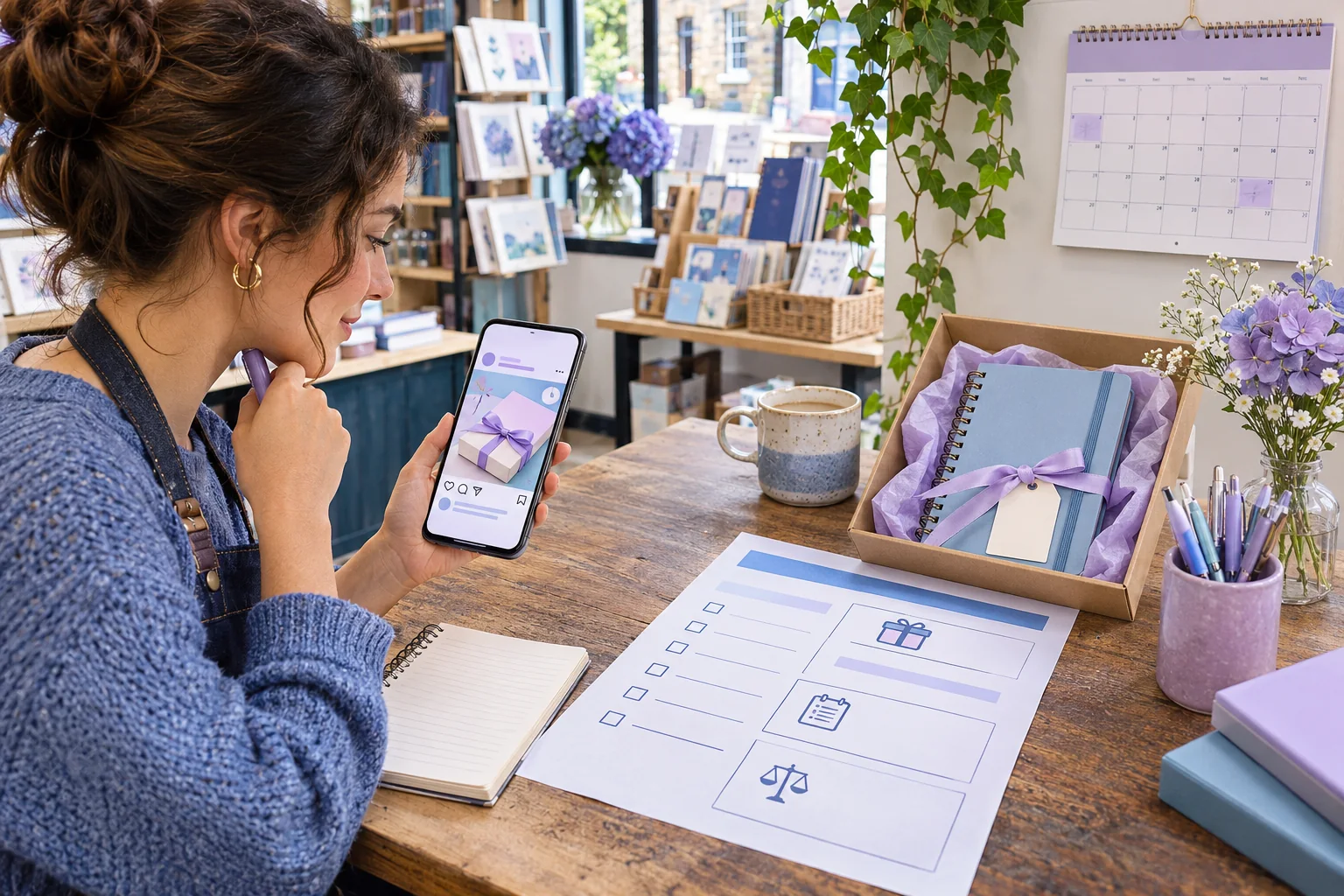
A UK small shop can use the worksheet below during a ten-minute team handoff. The owner identifies the actual choice, the editor checks its wording and the person on duty notes the result. One person can hold all three roles; the point is that someone owns each step. If the decision needs customer details, a poll may be the wrong tool. A normal enquiry, a clear product page or a more carefully designed survey could be better.
Do not treat the sticker as a visibility tactic. Meta says Instagram ranking uses many signals; no published rule says Poll automatically boosts a Story's reach. Use it because answers help the shop's content decision, not as an algorithm trick.
Write a fair question and two useful options
The best shop poll is easy to understand without reading a paragraph. 'Which vase should we show styled in a room next?' gives the viewer a simple action and a clear outcome. The options 'cobalt' and 'terracotta' refer to products visible in the same frame. Compare that with 'Do you love our new blue vase?' plus 'Of course' and 'Not yet'. The second version nudges agreement and offers no honest way to express a colour preference. A leading question may generate taps but gives the team less useful feedback.
Make the options parallel. If one choice is a colour, the other should be a colour; do not compare 'beautiful handmade cobalt' with 'plain terracotta'. If the shop asks about a time, show two real times it can staff. If it asks about a product, show two products currently available or make clear the decision is only about future content. Avoid topics that invite people to disclose health, financial or other sensitive details in a public or semi-public interaction. A binary sticker is a poor substitute for a confidential customer-support conversation.
Write down a tie rule before posting. The shop could say: if the result is close, demonstrate both colours over two Stories; if response is sparse, choose based on actual shop enquiries and stock. These are editorial rules, not statistical thresholds. No universal percentage makes a small, self-selected poll representative. The choice sheet makes the rule explicit so the owner is not tempted to present whichever answer she preferred as a decisive public vote.
- Choose a real customer-facing decision the shop can explain and act on.
- Write the question before picking a photograph or video.
- Check that both answers are truthful, distinct and possible.
- Decide what the shop will do if the result is split or too small to interpret.
Design one frame around the real products
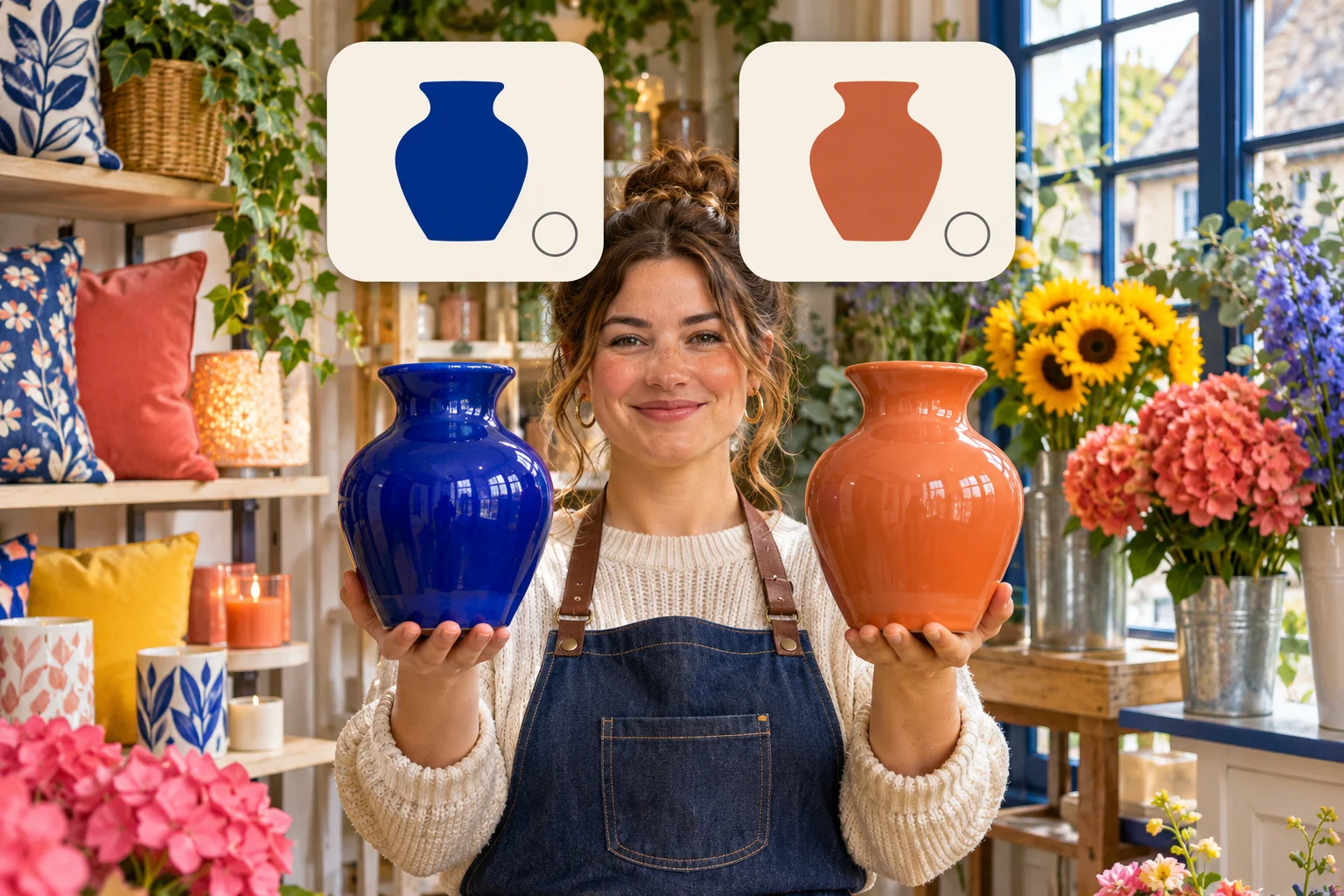
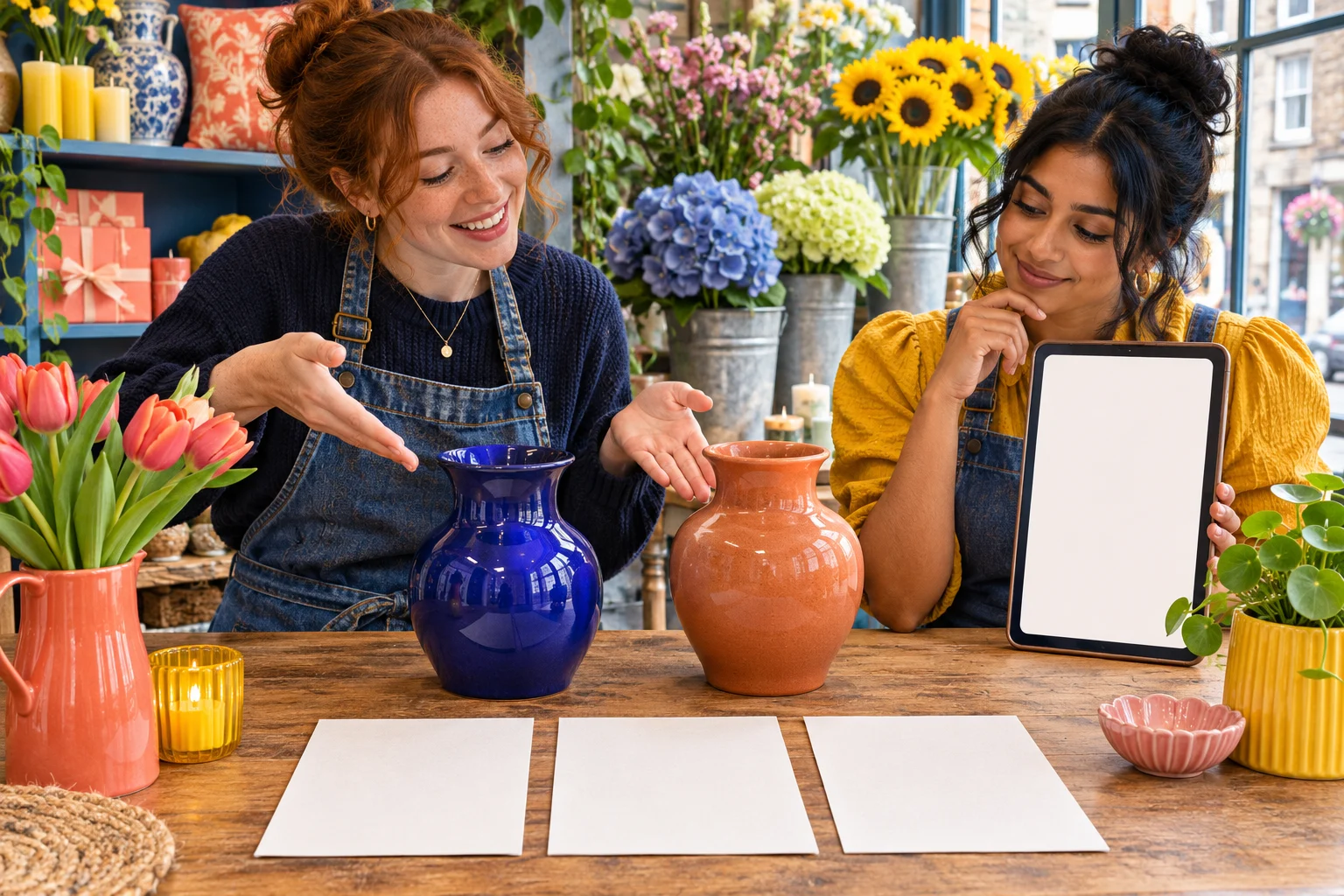
The planning image pairs the two vases with a blank portrait frame. That is the point: show the objects first, then ask one question. Use a photograph or short video made by the shop, with similar lighting and scale for both products. If one vase is shown beautifully styled and the other is half hidden behind a box, the visual itself leads the answer. A neutral presentation is more useful than an elaborate mock interface. Show enough detail for a customer to recognise the difference on a small screen.
Keep the question and options readable after Instagram's controls appear. Preview the frame on a phone before posting, including the top account area and bottom reply area. Put the important product view and the Poll sticker away from controls that may cover them. The actual safe area can vary with device and app version, so a live preview beats a rigid pixel rule. Check text contrast and whether both options remain legible without sound. If the team uses video, do not rely on narration alone to establish what is being compared.
Use the shop's own images or images it is licensed to publish. If customers or staff appear recognisably, check permission before posting. Keep the price out unless the current price is verified and the shop wants to make it part of the question. The poll should not quietly become a sales claim. A plain product comparison is enough; adding a discount, a countdown and a giveaway mechanic at once changes the task and the rules that need checking.
Publish through the current Story controls
Open Instagram on the authorised shop account. Create a Story with the approved image or video, open the sticker tray and choose Poll if it appears. Enter the question and the available answer choices, then move and resize the sticker where it remains readable. Before sharing, check the spelling, the actual products and the Story audience setting. The labels and arrangement can change; use the current app and its in-app help rather than treating any old article as a fixed map of the interface.
If Poll is missing, first confirm the right account is selected and that the app is current. Check whether another Story format or selected media type changes the visible stickers. Then consult Instagram's current help or report the problem from the app if necessary. Do not hand over the shop's password to a third-party tool promising to unlock stickers. A question in a normal Story caption can still invite a reply, but it is not the same measured poll. Record which route you used so nobody later compares unlike responses.
Once shared, open the published Story as the shop and confirm the sticker, options and visual actually display as intended. Note the local date and time and who is responsible for checking responses. If an option contains an error, do not quietly describe the result as valid. The team may need to correct or replace the frame and explain that the first version was wrong. A small shop can accept a short pause; it does not need to publish a misleading choice just to keep a daily content streak.
- Check the authorised shop account, image or video and product facts.
- Open the current Story sticker tray and confirm Poll is available on this account.
- Preview the question and both options at phone size, clear of app controls.
- Confirm the Story's audience setting before sharing, then save the publication time.
Give voters a next step without treating a vote as consent
A poll asks for one tap, not a purchase. If a viewer wants to ask about dimensions, collection or delivery, make the shop's public support route easy to find. A separate Story with a clear product link can point to a current page when it answers a separate need, but first verify that the page contains the product and information promised. The Story link-sticker guide covers that next step. Keep the poll frame focused on the choice; asking people to vote, click, message and order at once makes each action less clear.
Do not download a voter list and treat it as a prospect database. A person choosing cobalt has not thereby asked for a sales DM. The UK's Information Commissioner's Office says electronic-mail marketing rules apply to direct messages sent through social media. Responding to a customer who starts a genuine product enquiry is a different situation from sending unsolicited promotions to every poll voter. If the team wants to use DMs for campaigns, it should check the ICO's current guidance and its own consent and recordkeeping process first.
Individual answers may be sensitive in context even when a colour choice seems harmless. Keep any recorded summary aggregate and tied to the limited decision. Do not publish named votes or screenshots of private responses without a sound reason and permission. A simple note such as 'more responses for cobalt in this Story; sample not representative' is enough for an editorial decision. Customer-support details belong in the shop's normal support workflow, where staff can handle them consistently.
Keep polls separate from prize draws and claims
A shop may be tempted to add 'vote to win a vase' to encourage participation. That changes the poll from a light preference question into a promotion with entry conditions, eligibility, closing information and winner-selection duties. The UK ASA/CAP advice for prize draws in social media says significant conditions need to be clear and promoters must administer the draw fairly. A quick Story sticker is not an exemption. If the shop's real aim is a giveaway, use a properly planned promotion and the separate UK giveaway guide rather than slipping a prize promise into this poll.
The same care applies to later claims about the result. 'Our followers chose blue' may be misleading if only a handful of people saw and answered one Story. 'In yesterday's Story poll, more respondents chose cobalt, so we are showing it first' describes the evidence more precisely. Avoid using a percentage as a badge of broad UK consumer approval. If a business decision would need representative research, a self-selected social poll does not supply it.
Keep price, delivery and availability statements accurate at the time they are posted. If terracotta is out of stock, either delay the poll or ask a different question about future content without implying a currently purchasable option. If a product changes after the vote, update the page and any follow-up Story before directing people there. The shop's credibility comes from fulfilling the promise made in the content, not from a colourful sticker or a big-sounding response claim.
Read the response while it is available
After publishing, review the Story from the shop account while the current app still shows the poll response. Instagram's result views and labels may change, and some accounts may not display every historical detail in the same way. Record only what the screen actually shows: the observation time, the poll wording, each option and any displayed count or split. If the screen does not provide a count, do not reverse-engineer one from a rounded percentage. Save the team's decision note separately from any personal voter details.
Compare the result with the question you meant to answer. A majority for cobalt among voters might support the decision to feature cobalt first. It does not reveal how many UK shoppers saw the frame, how many were local, how many would pay for a vase or whether the option wording influenced the tap. Even a high response rate needs a denominator and context before it can be compared with another Story. The existing UK Insights guide helps with platform metrics; this guide stays with the practical question and the limited interpretation of its result.
Comments and replies can be more informative than the split if they identify a missing fact. Perhaps people ask whether the cobalt vase is dishwasher safe or whether the shop delivers to their postcode. Verify the answer rather than guessing in public. If the response is sparse, record 'not enough feedback to choose on this basis' and use existing customer questions, stock constraints and staff judgement. A small number of taps is not a failure that requires buying views or inventing an algorithm diagnosis.
- Record what the screen actually shows and when it was checked.
- Note relevant questions or objections without publishing individual voter identities.
- Choose a small next action and assign someone to carry it out.
Close the loop with a modest, honest action
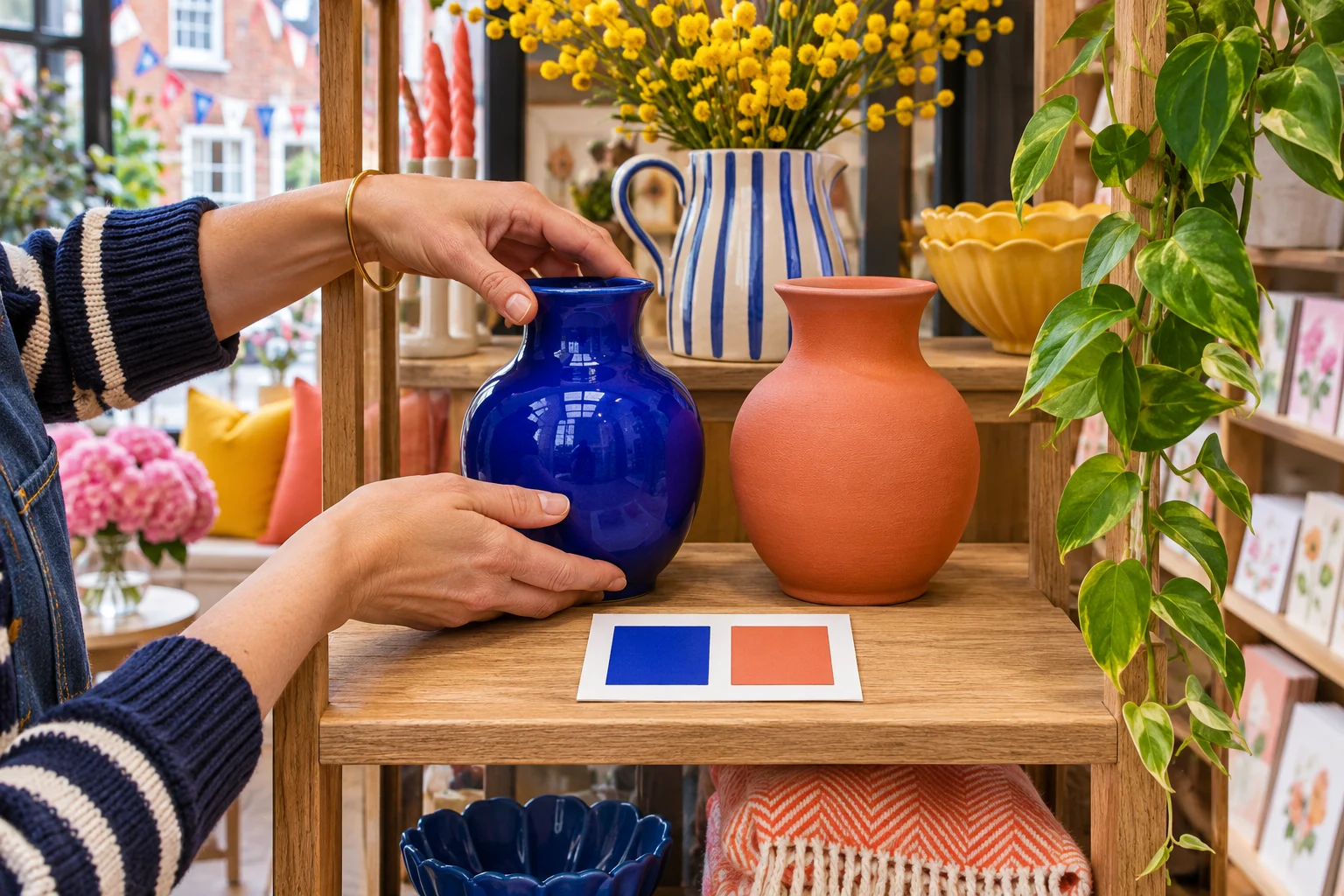
The review image shows a shopkeeper adjusting two vases beside a neutral two-colour card. That is an appropriate scale of action. The shop can say it is showing cobalt first because of the Story response, then show the terracotta range another day. It should thank participants without exaggerating their role and without suggesting that every follower voted. The follow-up is a useful piece of content in its own right: a room-setting demonstration, dimensions, materials and a current product destination.
Assign an owner and a date for the follow-up. If the shop promised to show a styling example tomorrow, someone needs to prepare and verify it. If results were split, explain that both looks will be featured. If the shop decides against either option because stock changed, say so plainly. A poll that asks for input and never acknowledges it can make a future question feel performative; keeping the promise matters more than running another sticker immediately.
Keep business records distinct. A later enquiry can be logged as an enquiry, and an order as a confirmed order, if the shop's own systems actually record them. Do not credit the Story poll for either merely because the events occurred afterward. The separate UK Instagram follower service concerns a visible profile count and its own package terms; it does not supply poll votes, local customer research or guaranteed sales. Use this worksheet to improve content decisions, not to turn a social interaction into a revenue forecast.
Build a repeatable shop routine without polling everything
A useful weekly rhythm starts with a real customer question, not a quota for interactive stickers. The shop can note questions heard at the counter or in support chat, choose one that a short visual choice could help answer, prepare the frame and decide in advance what the possible outcomes mean. It can then publish, review once at a sensible time and make the promised follow-up. If there is no genuine choice, an ordinary Story explanation may serve viewers better than a forced poll.
Avoid asking the same audience near-identical questions day after day. Repeated 'which colour?' stickers can become noise, particularly when the shop ignores the answer. Mix polls with demonstrations, factual product information, behind-the-scenes work and clear support routes. The team can compare its own past poll notes over time, but it should remember that different Stories have different audiences and contexts. A change in response does not automatically reveal a platform problem or a shift in UK market demand.
At the monthly review, ask three plain questions: Did people understand what was being compared? Did the shop carry out the stated follow-up? Did the format reveal a customer question worth answering elsewhere? If the answer is yes, keep using polls selectively. If not, simplify the next question or choose another format. This is a small editorial practice, not a promise of reach, engagement or orders. The shop remains responsible for the accuracy of whatever it publishes after the vote.
Frequently asked questions
How do I add a poll to an Instagram Story?+
On the authorised shop account, create a Story, open the current sticker tray and select Poll if it is available. Add one clear question and the answer choices offered by the app, preview the frame on a phone, check the audience setting and share. Menu labels can change, so follow the current in-app controls.
Why is the Poll sticker missing on my shop account?+
First verify the account, app version and media you are using. Check the current sticker tray and Instagram's in-app help or report the problem there. Do not give your password to a third-party unlock service. Use a normal Story question or another format if Poll remains unavailable.
Can I use a Story poll to decide what stock to buy?+
It can offer a clue from people who saw and answered one Story, but it is not a representative measure of local demand. Use it for a modest, reversible content or display decision. Check actual enquiries, orders and stock records before a larger purchasing decision.
Can I see who chose each poll answer?+
The details Instagram shows can vary by current app and account. Check the live response view on your own Story and record only what is necessary for the shop's decision. Avoid publishing individual voter identities or treating a vote as consent for a sales message.
Are Instagram Story poll votes anonymous?+
Do not promise anonymity. The creator's available response view may include voter information, and Instagram can change presentation. Tell staff to handle any visible personal details carefully and to share only an aggregate or suitably limited summary.
Will adding a Poll sticker boost Story reach?+
There is no reliable rule that a Poll sticker automatically gives a Story more reach. It gives viewers a way to respond. Use a poll because its question and follow-up are useful, and evaluate reach or completion separately using the account's actual Insights.
May I DM everyone who voted for a product?+
A vote is not a request for promotional DMs. UK ICO guidance applies electronic-mail marketing rules to social-media direct messages. Handle genuine incoming enquiries normally, and check the rules and your own consent process before sending campaign messages.
Can a poll also be a giveaway entry?+
That creates a promotion with different conditions and fair-administration duties. Plan and disclose those terms before asking people to enter. Consult CAP's social-media prize-draw guidance and the separate UK giveaway guide rather than treating a quick poll as a complete competition.
What should I do if the result is close or the response is small?+
Use the decision rule written before posting. You might feature both products or choose using current stock and actual customer questions. Report the result as feedback from respondents, without presenting it as the preference of all followers or UK shoppers.
Compare UK Instagram follower packages separately
If profile count is a separate goal, review the UK package quantity, destination and current terms. Follower delivery does not create poll votes, representative local feedback or guaranteed orders.
Review UK Instagram follower options