
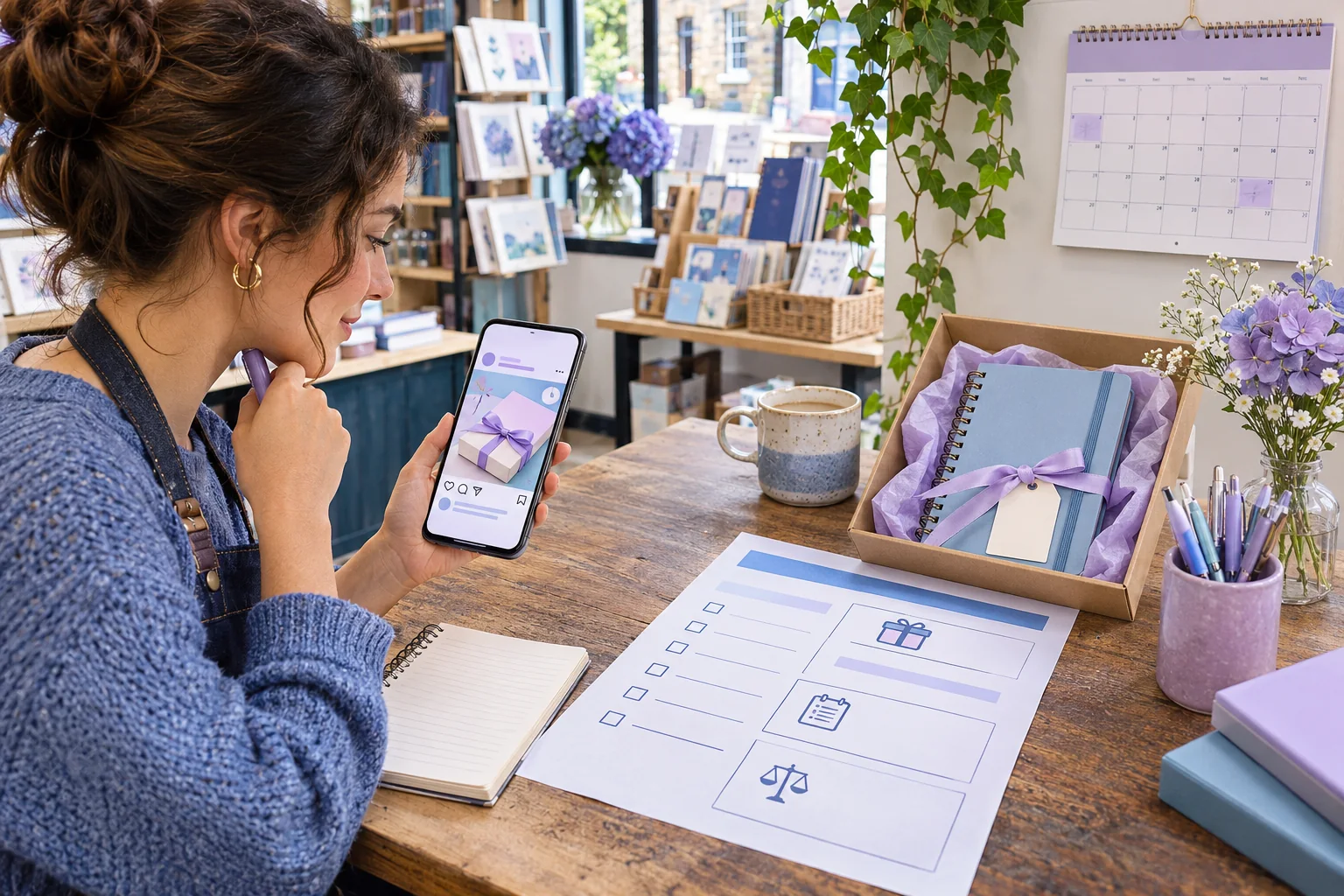
Preflight sheet for one illustrative UK stationery-shop prize draw
| Decision | Example to verify | Owner's evidence | Do not publish until |
|---|---|---|---|
| Promotion type | One chance-based draw for one boxed notebook | Approved written mechanics | The team has checked the applicable rules and any lottery concern |
| Prize | Exact notebook model and delivery area | Stock and delivery confirmation | The item is available and the description is accurate |
| Entry | One eligible public comment on the named post | Saved post URL and documented counting method | Every qualifying comment can be identified |
| Eligibility | Age and UK-area restrictions, if genuinely needed | Approved terms and practical verification plan | The team can apply each stated restriction fairly |
| Timing | Start and close at stated UK local dates and times | Approved schedule and time-zone check | The post, terms and working calendar agree |
| Selection | Verifiably random choice after closing | Dated entry register and selection record | A responsible person can reproduce the process |
| Prize delivery | Safe contact route and reasonable response window | Dispatch or handover record | The team can fulfil the advertised prize |
Decide what sort of promotion you are actually running
A random prize draw and a skill-based competition are different promises. If a person can win by chance after entering, describe the mechanism as a prize draw. If a panel judges skill, say what it will judge and how. The ASA/CAP guidance distinguishes these formats, and a caption cannot change the real mechanism by calling a chance draw a 'competition'. Before choosing any paid-entry, purchase-linked or unusual mechanic, get appropriate legal advice: the rules around lotteries and free entry are more involved than an ordinary social post.
Imagine a fictional stationery shop in Bristol offering one boxed notebook from its own stock. The shop wants to let people leave one eligible comment on a named Instagram post, then make a verifiably random choice after the announced close. That is a simple chance-based example, not a claim that a Bristol business has run or won anything. The shop writes down the owner of the promotion, the actual prize and the process before designing an image. It does not improvise a second prize after seeing the number of comments.
Ask what the promotion is for beyond a visible spike. A small business might want to introduce a product and answer questions about it. It cannot assume the entrants will be future customers or that an Instagram count represents people in its delivery area. Start with a clear customer experience: someone should understand the prize and terms, be able to enter without guesswork, and know how the result will be handled. If the team cannot support that process, postpone the announcement.
Check the UK rules and Instagram's terms before choosing entry actions
The CAP Code's promotional-marketing rules cover UK marketing communications for prize draws, including those on social media. ASA/CAP says a promoter is responsible for all stages and should avoid misleading people. Its 2026 prize-draw advice also warns promoters to check whether a proposed mechanism could be an unlawful lottery. A shop running a cross-border draw, restricting age, requiring payment or involving a regulated prize needs advice on its exact facts; a generic article cannot certify those terms.
Instagram has a separate official promotion-guidelines page. It places responsibility for official rules, eligibility, legal compliance and prizes on the organiser and says not to inaccurately tag content. The page also describes platform-release and non-sponsorship wording for promotions. Review the live page when drafting the final terms, because platform terms can change. Do not copy a disclaimer from an old giveaway and assume it covers the current mechanics.
Keep the entry action simple and verifiable. Asking for a public comment on one specified post is easier to count than making people follow, like, repost a Story, tag several friends and visit another platform. Some actions can be impossible to verify for private accounts; ASA/CAP specifically discusses the difficulty of checking private Story shares and bonus entries. If a required action cannot be observed or reliably evidenced, choose a different mechanism. Never ask people to tag themselves inaccurately in an image.
Choose a real prize, location and entry boundary
Describe the prize the winner will receive, not an aspirational photograph of several items when only one is available. For the fictional shop, the owner checks the notebook model, colour, packaging and stock. If postage is included, the shop confirms where it can deliver and who pays any costs. If collection is required, it identifies the accessible location and practical collection window. ASA/CAP expects prizes to be awarded as described, with a reasonable equivalent only if the original genuinely cannot be supplied.
Set only eligibility restrictions that are justified and can be applied. A shop may need to limit a physical prize to an area it can actually deliver to, and an age restriction may matter for certain goods. State those restrictions clearly from the start. Do not use an ambiguous 'UK only' label if the published terms exclude part of the UK or if the shop will ship to only a few postcodes. A limitation that will disappoint a winner belongs in the initial invitation as well as full terms.
Pick one closing time in a named UK local time zone and copy it into the post, terms and internal run sheet. Explain how late comments, edited comments, duplicate entries and deleted accounts will be treated before the first entry arrives. If the shop can only check a public comment on the original post, say so. A contestant should not need to infer that a reply to a Story or a DM also counts. Keep a copy of the approved rules so the team can show what entrants were told.
Put significant conditions where entrants first see the offer
ASA/CAP says significant conditions generally belong in the initial marketing material, not only behind a small link. The exact list depends on the promotion, but typical conditions include how to enter, closing dates, prize nature and number, eligibility and significant restrictions. A short caption can still be clear: 'One boxed notebook; one eligible comment on this post; closes [checked local date and time]; open to [accurate eligible area and age]; full terms at [working link].' Replace every bracket with verified facts before posting.
Test the full-terms link from a phone that is not signed in as the business. The destination should open before entry, show the same prize and dates, and explain the details that will affect validity or fulfilment. If an Instagram caption cannot make a link clickable, give a clear, working route through the profile and check it at launch. A vague 'terms apply' line does not tell people where to find them. A Story reminder should repeat significant conditions or link clearly to the original post and terms, rather than changing the offer.
For the Bristol example, the owner checks four surfaces side by side: the creative image, initial caption, full terms and the team's run sheet. Each must name one notebook and the same close. If a partner account reposts the offer, the partner must not shorten the wording until the eligibility boundary disappears. Prepare a correction process for a genuine mistake, but do not assume a silent caption edit after people enter is fair. ASA/CAP says terms should not normally be changed mid-promotion.
- Name the promoter and the exact prize.
- State the entry method, eligibility, closing date and time, and major restrictions in the initial post.
- Give a direct route to the full terms before an entrant acts.
Write complete terms and a proportionate privacy plan
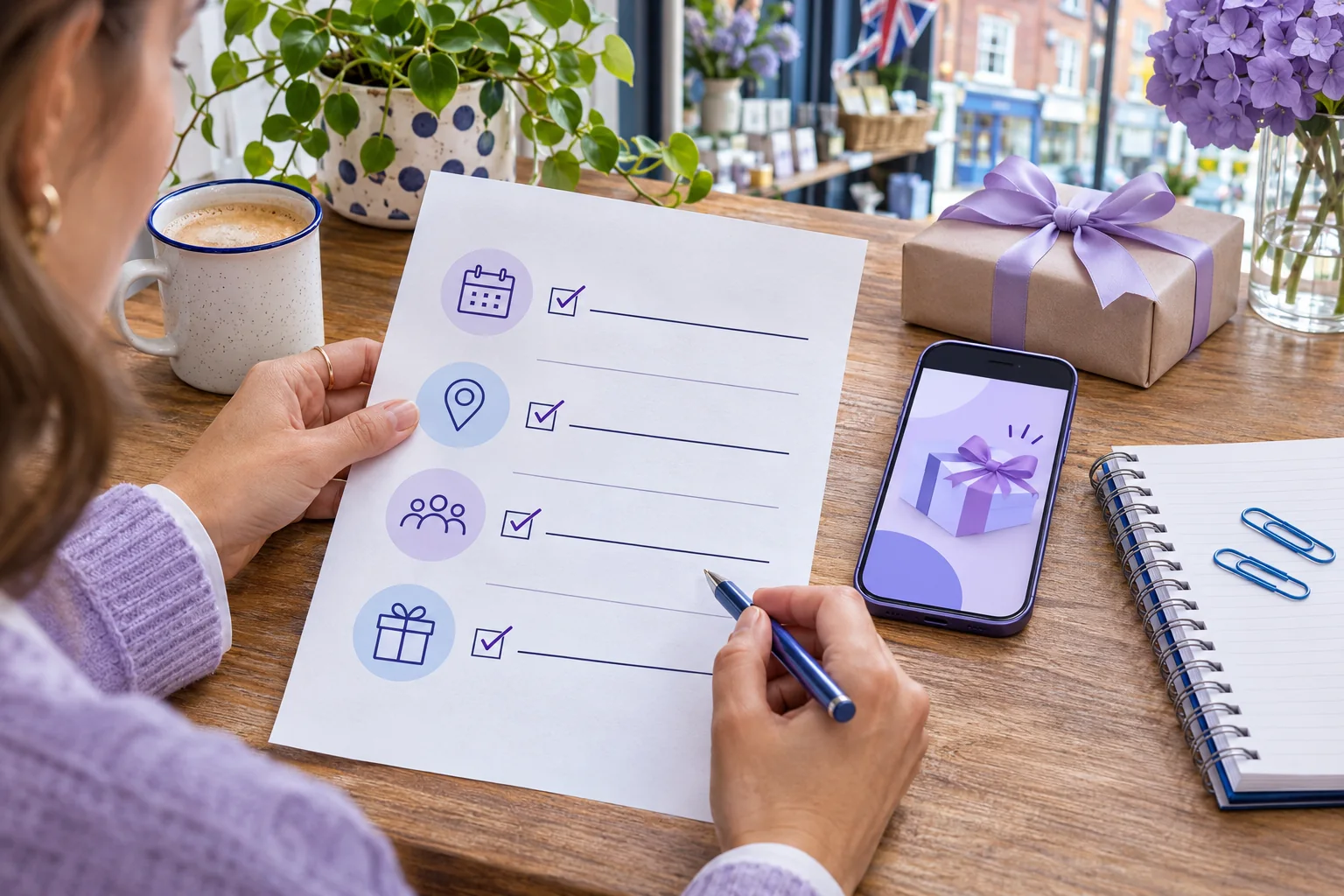
The full terms should identify the promoter, prize, eligibility, entry route, open and close times, number of entries allowed, how the winner will be chosen, when and how the winner will be contacted, any response deadline, prize-delivery plan and what happens if a winner is ineligible or cannot be reached. Include Instagram's current promotion wording as its official rules require. Keep the words plain enough for a person to understand before entering; a legal-looking block of tiny text is a poor substitute for an answerable process.
If the shop needs a delivery address, collect it from the chosen winner through an approved private route after selection, not from every commenter. Do not demand a password, payment card or recovery code as proof of entry. Decide who can access the entry register and winner details, how long they are needed and how they will be disposed of under the business's actual privacy process. The ICO's small-business guidance is a starting point for handling personal data; a public comment does not grant permission to add entrants to an email marketing list.
A statement about publishing a winner's name needs special care. ASA/CAP guidance addresses giving information about winners while respecting objections and privacy; review the current rule and the exact circumstances before promising either secrecy or a public announcement. The shop can plan to contact the selected account privately first, verify eligibility and ask what can be disclosed. A photograph of a winner holding the prize is a different use again and needs its own permission. Keep fulfilment proof without turning a person's private details into promotional material.
Create an accurate post and check partner disclosure
Show the actual prize in the image or Reel. A close crop of the notebook and packaging can make the offer understandable without adding claims about scarcity, value or a likely outcome. The caption should answer the entry question before telling people to share it. If a creator or neighbouring shop helps promote it, agree who owns the prize, posts, terms, moderation and delivery. The person who appears in the content is not automatically the party responsible for awarding the prize.
A brand's own prize promotion is a marketing communication. ASA/CAP's brand-owned social guidance and the current influencer guidance help teams assess how to make a commercial connection clear when a partner receives payment, a gift, an affiliate benefit or another incentive. A Collab label or tag shows a connection but may not explain its nature to the audience. Review the final published post as a viewer would see it and apply a clear label where the current guidance calls for one. Do not treat one boilerplate 'not affiliated with Instagram' statement as an advertising disclosure.
Choose a sensible place in the content calendar. Several reminders can be useful if they answer different questions, but flooding every format with 'last chance' cards can obscure the terms and strain the team answering enquiries. Check captions, alt text, Story link destinations and any platform-native controls on the account actually publishing. If a partner cannot keep the full terms accessible or makes a stronger claim than the shop approved, pause the partner post and correct it before it travels further.
Run the entry period without losing or inventing entrants
On launch, save the public post URL, approved terms and exact start time. Test the terms route, read the post from a normal viewer account and confirm that the prize shown is the prize in stock. Give one person responsibility for monitoring questions and suspicious copycat accounts. A scammer may imitate a giveaway and ask entrants for payment or personal details; the shop can state in its own approved messages that winners will not be asked for account passwords or a fee to claim the prize.
Build an entry register only from the published mechanism. If the terms say one eligible comment per account, define what counts as a duplicate and apply that rule consistently. Do not quietly exclude a comment because it was critical of the shop or because a different account is more attractive for publicity. If there are multiple posts or partner accounts, decide before launch whether entries are combined and how duplicates will be handled. ASA/CAP has ruled on significant conditions omitted from multi-platform promotions.
Avoid promising bonus entries for a private Story share or another action the organiser cannot verify. The published procedure must let every person who qualifies enter the same selection pool on the stated basis. During the draw, record any platform outage or moderation problem and assess whether it affects fair entry. If the problem is material, seek appropriate advice rather than inventing a new close after the fact. Preserve a factual record of any correction and the notice shown to entrants.
- Save the approved post, terms and any correction.
- Record valid entries using the published rules rather than a later preference.
- Keep a named owner for questions, suspicious accounts and changes.
Close on time and choose a winner by a checkable process
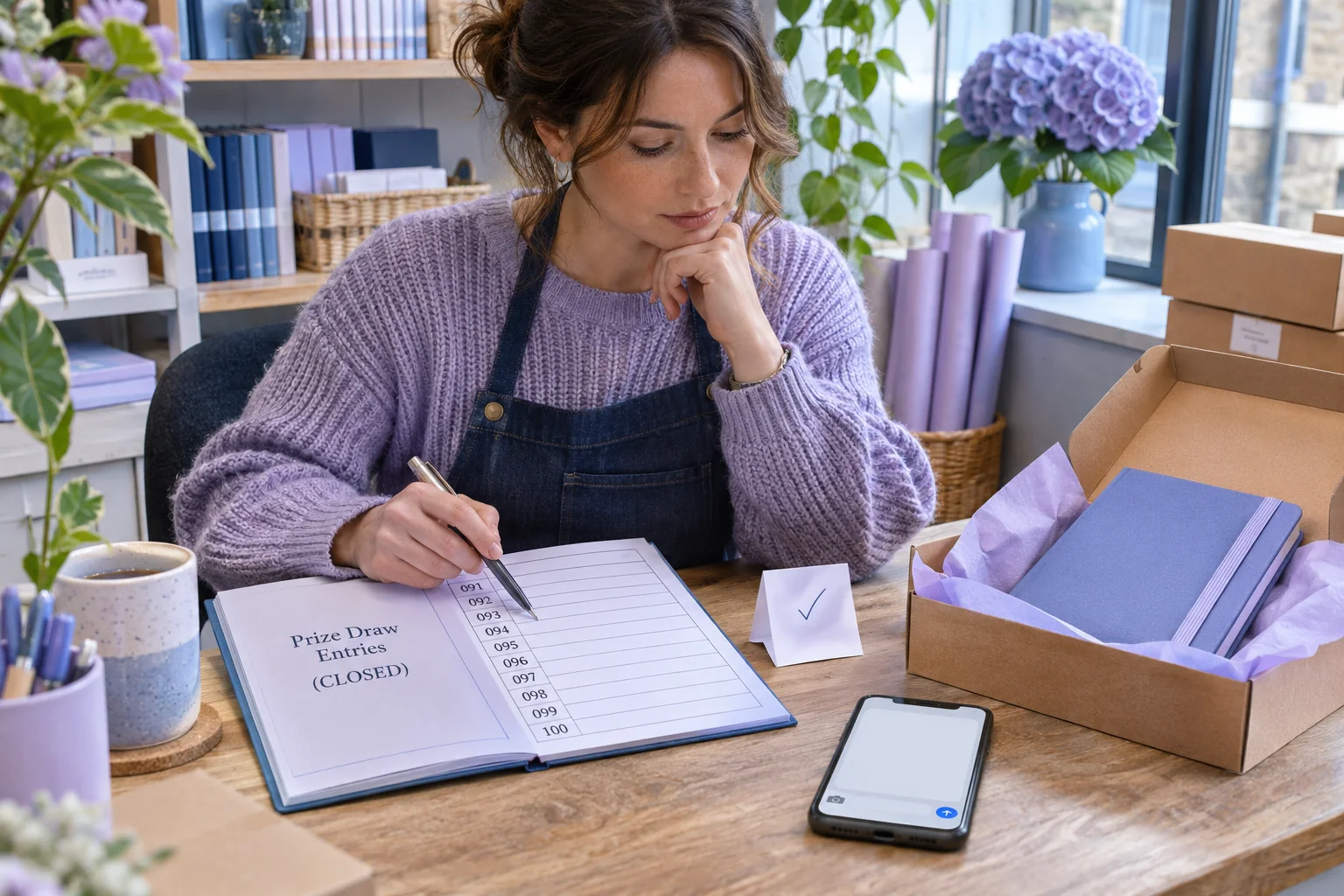
At the advertised close, stop accepting new entries and record the time. Export or otherwise preserve the eligible set using a method the shop can explain; do not rely on the changing order in which a social app displays comments. Apply only the written eligibility and duplicate rules. Give each valid entry a unique number and count the final pool. If there are zero valid entries, follow the published terms rather than announcing a fabricated winner.
For a chance draw, ASA/CAP expects selection in accordance with the laws of chance. Its guidance points to a verifiably random computer process or independent oversight as ways to substantiate the result. A member of staff scrolling and tapping a favourite comment is not a documented random draw. The shop records the count, method, date, selected entry number and the person who performed and checked it. If a tool is used, save enough evidence to explain its operation without disclosing all entrants' details publicly.
Check the selected entry against the same published rules, then contact the account through the official business profile and the channel promised in the terms. If the winner cannot be verified or does not respond within the stated period, apply the documented reserve-selection process. Do not change the response window because the selected person is inconvenient. Make sure the prize is still available before sending a public announcement. A neat selection video cannot replace a complete entry register and evidence that the choice was fair.
- Freeze the entry list after the published close.
- Check exclusions against the written terms.
- Record the random selection method and result before contacting anyone.
Notify safely, fulfil the prize and document what happened
Tell the selected person exactly what has been won and what information is needed to deliver it. Use a private, controlled route to collect a postal address or arrange collection. Never ask for an Instagram password or a payment to release the prize. Make it easy to verify that the message comes from the same business account used in the promotion. If the person reports a copycat message, investigate and post a factual warning from the official account without revealing the entrant's private details.
Deliver the advertised item within the stated time and retain evidence of dispatch or handover. ASA/CAP says promoters must award described prizes and be able to show they have done so. If a genuine supply problem arises, check its guidance on a reasonable equivalent and explain the change to the winner; do not silently substitute a cheaper item. Keep the identity, address and shipping record only as long as the business has a justified need and its privacy process allows.
Close the public invitation accurately. A pinned Story Highlight, archived promotion page or old post can still be seen after the draw. Mark the promotion closed where possible and keep the rules accessible for a reasonable review period. If an announcement is appropriate, avoid publishing a full name, handle, photograph or home location without checking the applicable rule, the person's wishes and the purpose of disclosure. Report the result the shop can substantiate, not a made-up count of 'new customers' inferred from comments.
Review a useful result without confusing it with a follower spike
Record the number of eligible entries, questions about the rules, complaints or fixes, time spent administering the draw, and whether the prize was fulfilled. These are operational facts the business can verify. If there were clicks to a product page or legitimate post-promotion enquiries, keep the source and date attached to each observation. Do not treat every entrant as a buyer: some people may like the prize and never be interested in the rest of the shop.
Instagram's likes, views, saves and new follows describe different activity. A person may enter without following, follow without entering, or see a reminder twice. Neither a high view count nor a rise in followers proves that the draw reached the intended UK customers or made sales. Compare the post with a realistic baseline only when the metric and time window are comparable. Note any simultaneous email, in-store display, partner post or paid ad before attributing a change to the giveaway.
Use the review to improve the next decision, not to justify a permanent series of promotions. If entrants repeatedly asked whether shipping was included, put delivery terms earlier next time. If the team could not verify a requested share, remove that action from future entry rules. If the prize led to no useful conversations, consider a clearer product explanation or a different offer. An honest small draw with fulfilled terms tells the shop more than an impressive-looking public number with no entry or delivery record.
Keep optional follower packages outside the prize-draw mechanics
A HitsBoost follower package is a separate purchase for an eligible public Instagram profile. It is not a valid entry method, a substitute for random winner selection or evidence that a promotion was administered fairly. If a shop considers one, review the current UK service page for the available tier, quantity, terms and final checkout total. Keep the profile password private. Decide on that purchase separately from the prize and from any advertised chance of winning.
Do not tell entrants that a purchased count represents local people, real customers, participation, reach or endorsement. Meta has publicly described action against artificial engagement, so claims of platform approval or guaranteed distribution would be unsound. A larger follower total cannot repair unclear eligibility, a missing winner log or a prize that was not awarded. The prize-draw owner should be able to document the promotion even if no follower service is purchased.
The strong finish is a promotion that was accurately described, fairly run and completed. Save the published post, terms, entry and selection evidence, winner communication and fulfilment record in the appropriate business location. Check which information should be kept and which should be removed. If the team cannot show those steps, spend the next planning session improving the process rather than chasing another count. The optional service page can answer its own buying questions without changing the meaning of this guide.
Frequently asked questions
Is an Instagram giveaway automatically legal in the UK?+
No. The exact prize, entry mechanism, eligibility, advertising and data handling need review. ASA/CAP specifically advises checking whether a proposed chance promotion might be an unlawful lottery. Seek qualified advice for a complicated or paid-entry arrangement.
Is a prize draw the same as a competition?+
No. In ordinary promotional use a prize draw selects by chance, whereas a skill-based competition judges an entry against stated criteria. Describe the method you actually use and check the current ASA/CAP rules for that format.
Can I put all giveaway rules behind a link in my bio?+
A link can provide the full terms, but significant conditions should generally appear in the initial post too. State the prize, way to enter, close, eligibility and material restrictions where the offer first appears, then point clearly to the complete terms.
Do Story shares make good bonus entries?+
Only use an action if you can verify every qualifying entrant fairly. ASA/CAP notes that a share from a private Instagram account may not be visible to the promoter, making bonus entries difficult to confirm or count.
Can I pick a winner by scrolling and tapping a comment?+
That does not demonstrate a chance-based selection. Freeze the valid entry pool and use a process you can evidence as random or independently supervised, in line with the current ASA/CAP guidance.
Must I tell everyone the winner's full name?+
Review the current CAP rule on winner information and the entrant's privacy before promising a particular public announcement. Contact and verify the selected person privately first; do not publish a full name, handle, face or address by default.
Can I email every entrant after the giveaway?+
An entry is not automatic consent to unrelated marketing. Check the ICO's current direct-marketing guidance and your own privacy process before using entrant details for another purpose.
Will a giveaway or bought followers guarantee sales?+
No. A draw can create entries and platform activity; a follower package concerns a defined profile count. Neither guarantees UK customers, reach, engagement, recommendations, sales or repeat purchases.
Compare Instagram Followers packages.
Prepare the public destination, then review the quantity and terms that fit your goal.
Review UK Instagram follower options