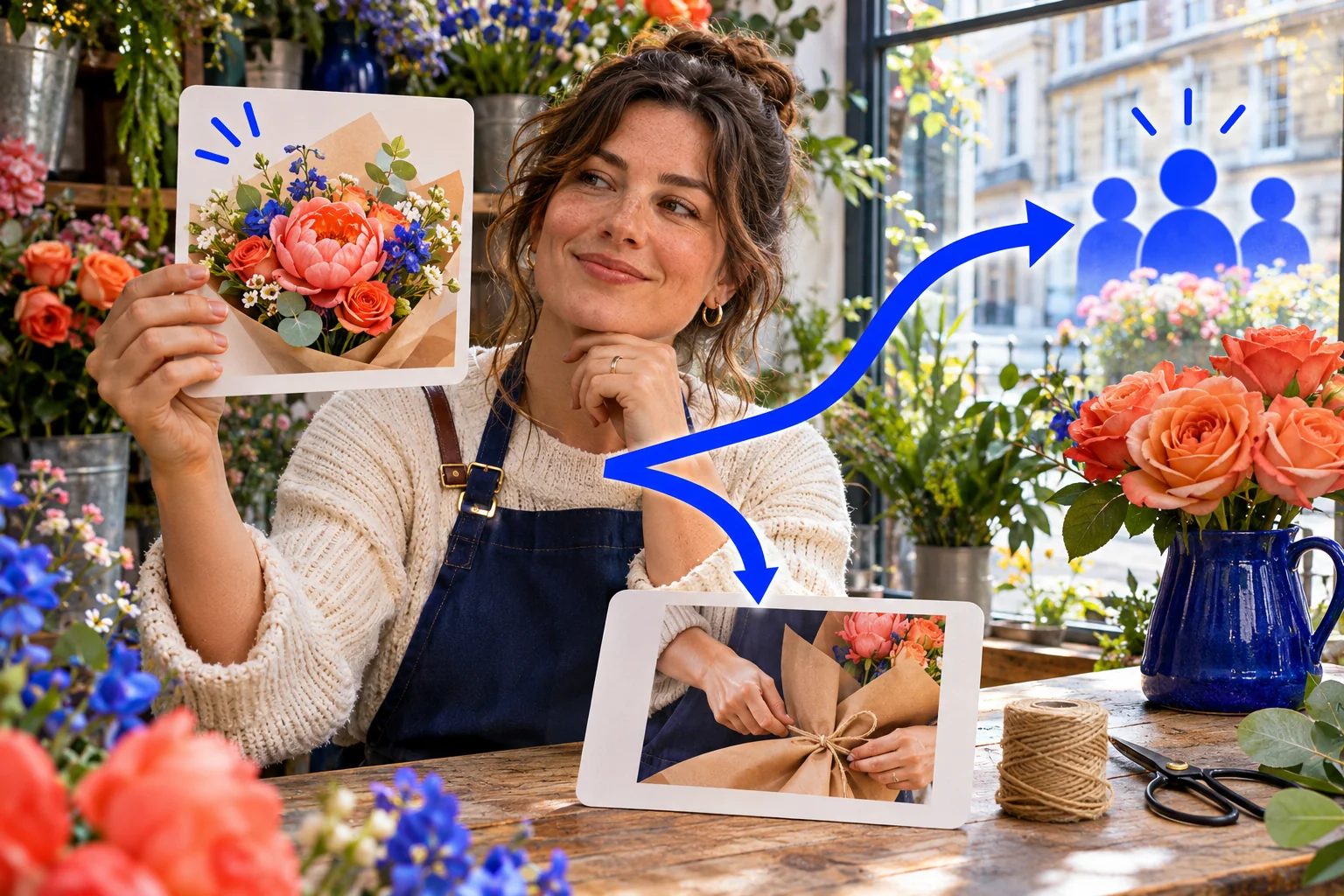

Three-episode pilot for a fictional Bristol ceramics studio; the checks are editorial, not a prediction of results
| Episode | Standalone viewer question | Scene and proof | Fact owner and public next step |
|---|---|---|---|
| 1: Shape | Why does the mug have this handle shape? | Maker forms and tests the handle on the actual sample | Maker checks the design; point to the current product page |
| 2: Glaze | How does the blue finish appear? | Show the approved glaze process and one real sample | Studio lead checks material wording; link current care details |
| 3: Finished mug | What does the completed mug look and feel like? | Show the same design in hand and beside an everyday object | Stock owner checks the photographed version and live availability |
| Review | Which uncertainty remains? | Compare genuine follow-up questions with the pilot's stated purpose | Correct product information before planning another episode |
Decide whether the making process deserves a series
A good series begins with a useful distinction, not with a promise to post every day. In the fictional Bristol studio, the finished blue mug creates three genuine questions: why the handle was shaped this way, what the blue glaze looks like before and after firing, and how the finished object fits in a person's hand. Each question suggests different evidence. If a studio only has one interesting shot of a wheel, three nearly identical Reels would waste both the maker's time and a viewer's attention.
Write the series promise in plain language: 'Follow one mug from a design decision to a finished object.' Then ask what someone who sees episode two first would learn. That person may have no idea an episode one exists. The second Reel should therefore identify the mug, show the glazing step and explain why it matters without asking the viewer to go backwards merely to understand the clip. A recurring visual cue can connect episodes; it cannot replace a complete answer.
Meta's professional best-practices hub covers creation, engagement and reach, but it does not prescribe a universal series formula. Treat the first three episodes as an editorial pilot. A broad content calendar can hold other product posts, Stories and service notices; this guide is narrower. Its job is to decide whether one craft story contains enough distinct, verifiable moments to earn a short sequence. The studio can stop after three if the process does not support more.
- Name the maker process and the customer uncertainty it can clarify.
- List the three genuinely different moments worth showing.
- Stop if all three clips would repeat the same demonstration.
Choose a process, not three copies of one answer
A maker may be tempted to cut one long workshop video into three arbitrary parts. That can leave the second clip beginning halfway through an action and the third with no context. Instead, divide the real process at decisions a customer can understand. For the mug, handle shaping is a design decision, glazing is a material and appearance decision, and the finished form is a use decision. The same object gives continuity while the viewer gets a new reason to watch each episode.
Compare those purposes with the separate UK guide to answering customer questions through Reels. That article starts with an existing question and creates one proof-led reply. A maker series starts with a coherent process and finds several standalone questions along it. A customer's direct question can still improve a later episode, but the series should not become a stack of near-identical FAQs. A second maker, such as a leatherworker, might show pattern cutting, stitching and fit; the structure is transferable without copying the pottery scenes.
Use a three-episode proof and fact sheet
The pilot table above is a working sheet, not a performance forecast. Fill one row per episode with the question, the physical scene that proves the answer, the person who owns the fact and the public destination. The Bristol studio's first Reel is about the handle shape. The maker can show two attempts and explain which shape feels secure in the hand. It should not claim a test or certification the studio has not performed. The next two episodes can follow the glazing and finished mug with their own verified facts.
Put the item beside its current product record before filming. Is the blue mug a one-off sample or a design the studio actually offers? Are the colour, dimensions, material and care directions current? A visually convincing process clip can still mislead when its caption quietly names a different batch. GOV.UK's product-description guidance calls for accurate descriptions. The studio should therefore identify the specific version shown and keep uncertain batch details out of an evergreen clip until they can be checked.
A fact sheet also gives staff a correction route. Note the shoot date, the product page, the owner who approved each statement and what would make it stale. A new glaze, changed care advice or sold-out batch should trigger a review of the relevant Reel and its caption. Do not assume an old video disappears when the next episode goes up. A concise record lets the studio enjoy the creative process without losing track of the public promises attached to the work.
- Confirm the item, batch and material shown.
- Check whether a process claim has an approved source.
- Send viewers to the current product record for conditions that may change.
Film with a repeatable setup that does not interrupt the craft
The first inline image shows a maker filming a mug on a wheel with a camera on a tripod while later stages sit nearby. The purpose is a practical filming arrangement, not a suggested app layout. A repeatable camera position can save setup time and keep the object clear, while each episode records a different action. For the handle Reel, place the camera where the viewer can see the hand and the join; for the glaze Reel, move closer to the brush and surface. Consistency should help recognition, not hide the evidence.
Make a short shot list before the clay is wet. Identify the essential action, one close view and the finished point that shows what changed. Protect the real work: a maker should not rush a join or repeat a risky step only for footage. Shoot in a bright area, check the central phone crop and record a quiet take of any spoken explanation. If hands alone tell the story, a voiceover can be recorded later. Ask permission before including colleagues, customers, artwork or identifiable private material in the background.
A viewer may watch without sound, so the object and change must remain understandable visually. Captions can carry spoken information, but review automated wording carefully, especially negations and material names. RNID publishes current Instagram caption guidance; the separate HitsBoost guide explains editing controls. Keep music and other third-party material within the rights available to the business. The UK Reels-music guide covers that decision in detail. A clear craft action will usually convey more than a busy montage that conceals the actual technique.
- Keep the object and the maker's hands inside the centre of a vertical frame.
- Record a quiet, bright take before adding music or effects.
- Review captions and the finished crop on a phone.

Make each episode complete for a first-time viewer
Build each Reel around three editorial beats: identify the object and question, show the relevant action, and tell the viewer where to check the current details. Episode two could begin with the same blue mug shape and a plain spoken line such as 'This is how this glaze changes the finish.' The viewer does not need a recap of episode one to understand the demonstration. If a preceding step is essential, show one brief visual reminder before the new action rather than asking people to hunt for another clip.
A recognisable series cue can be a consistent opening frame, recurring camera angle or colour of worktable. It need not be a lengthy animated title. On a small phone, the mug and the change should remain visible beneath interface elements. Choose a cover that tells this episode's topic, not only that it belongs to a numbered series. The separate cover guide addresses editing mechanics. Avoid embedding a price, guarantee or measured result into an image when that information could change or cannot be substantiated.
The closing invitation should match what exists now. 'See the current blue mug details on our profile' is useful only if the exact item can be found from that profile. 'Ask about the next batch' is useful only if someone is responsible for answering. A generic promise that following the account will unlock a reveal can disappoint when the workshop schedule changes. Each episode should leave a complete piece of knowledge behind even when the viewer never follows the studio or sees the rest of the series.
Keep product claims and buying information current
A making Reel is often discovered long after it was filmed. A caption can therefore become inaccurate even if it was right on publication day. The Bristol studio can show how a blue glaze looked on one sample, but it should avoid claiming every fired mug will match that shade exactly if the process varies. If the camera shows a prototype, name it as a prototype. If the mug is made to order, state the current route for checking availability rather than placing a fixed delivery promise into an evergreen clip.
When a viewer wants to buy, the Reel should lead toward the shop's current product information. The normal online selling flow must carry applicable price, delivery, payment and cancellation information; a social caption does not replace it. GOV.UK's online and distance-selling guidance is a useful check for a UK business that takes orders online. The separate UK guide on Instagram product price, delivery and returns goes deeper into keeping those public statements aligned. This series should point to that verified route without repeating every term in every episode.
Review each live destination from a phone as an ordinary visitor. If the mug listing is gone, stop using a caption that says it is ready to buy. If a workshop class appears in a clip, check whether the course date and place still exist before directing people to book. Keep a small change log for the account owner: affected episode, claim, source of the change and correction. The maker's story remains valuable even when a product sells out, but its next step must no longer imply a current offer that the studio cannot fulfil.
Choose a rhythm the workshop can maintain
A series can fail because filming competes with paid work, not because the idea lacks interest. Start with three episodes that can be made from normal production moments. The studio might film the handle while one batch is being shaped, the glaze when samples are approved and the finished mug after it is ready. These events may not be exactly a week apart. The published schedule should follow a real making cycle, and the team should avoid promising a day it cannot reliably meet.
Assign a simple ownership chain: the maker verifies the action, a second person checks the product words if needed, and one account owner publishes and monitors replies. Keep files named by episode and date so the blue glaze is not accidentally paired with a different mug. If the account's scheduling controls help, use the current app route shown to that account; the separate scheduling guide covers those controls. A draft is not permission to publish a fact before its owner has checked it.
Meta's best-practices hub can offer account-specific guidance, but it does not establish that a particular posting frequency guarantees reach. The studio should choose a rhythm it can sustain while keeping current product information accurate. A missed week is less harmful to a customer than a rushed claim about stock or safety. If production pauses, the team can keep the existing Reels useful by checking their destinations and answering relevant questions rather than publishing a filler episode solely to maintain an arbitrary streak.
- Publish only when the next product fact and destination are ready.
- Assign a person to check the live post and responses.
- Leave room to pause when production or stock changes.
Respond to viewers without exposing customer details
When the first episode appears, someone should check for questions that reveal a missing fact. 'Does the handle fit a left hand?' could suggest a genuine demonstration if the studio can test and explain it. 'Where is my order?' is an individual service case and belongs in the approved private support route. Do not quote a person's message, handle or order reference in a Reel without appropriate permission. Rewrite a general question in the studio's own words when it can be answered publicly.
Answer public comments with verified facts. If someone asks whether the blue glaze is dishwasher-safe, the maker should check the actual care guidance instead of guessing from similar ceramics. A correction in a comment may not reach everyone who watched the Reel, so consider whether the caption, product page or video itself needs to change. The UK enquiry handoff guide explains how to assign a reply owner and escalate private matters. The content series can use the same discipline without becoming a customer-service channel by default.
A viewer's suggestion is not automatically the next episode. Record repeated themes, then ask whether the workshop can show a truthful answer with its own work. If a question concerns a special order, a supplier's proprietary process or a customer's image, it may be unsuitable for public filming. An honest 'we cannot show that step' can protect both the relationship and the accuracy of the series. Content ideas are useful only when the studio can make and maintain them responsibly.
Review the pilot against real questions and shop records
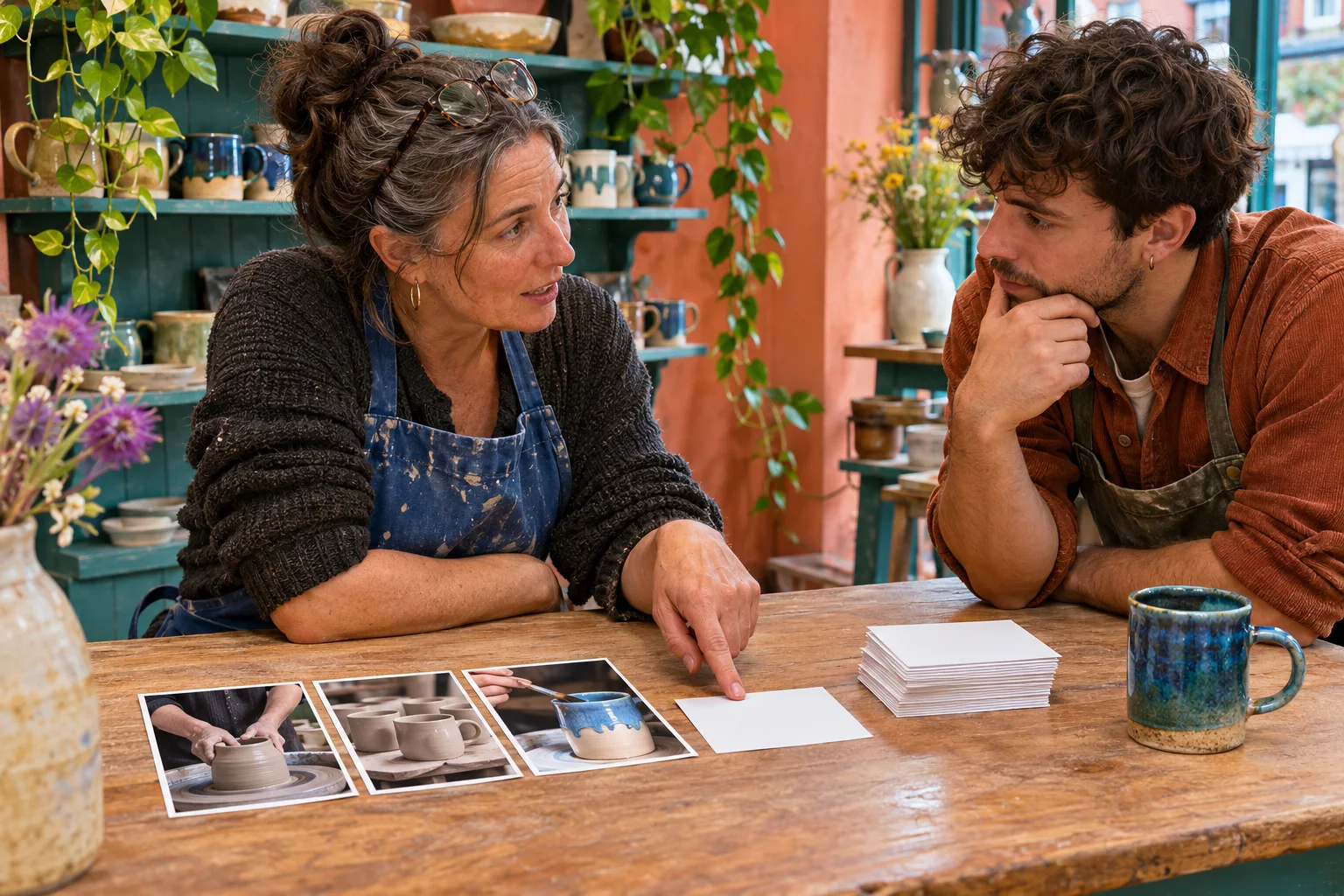
The second inline image shows two makers looking at three process photographs and blank cards. The cards do not contain readable questions; they represent the practical step of comparing published episodes with the questions customers actually raised afterward. Before publishing, write one review question for the pilot: did each Reel clarify its intended making decision, and what confusion remains? Later, read the comments and approved enquiry notes for themes. A card can be filled in from a real question without copying a person's private message into a public plan.
Professional account Insights may show views, interactions, accounts reached or other labels depending on the account and current app. Record the exact label, period and Reel URL instead of comparing unrelated figures. A rise in playback tells the studio that the content was encountered; it does not establish that viewers understood the glaze, visited the shop or bought a mug. If people keep asking the same question after the relevant episode, inspect the opening and demonstration. The information may have been obscured by the camera angle or the caption.
Keep commercial evidence in its own column: confirmed enquiries about the mug, product-page visits if measured reliably, and actual orders in the shop's records. A person may have heard of the studio at a market, via search or from a friend before seeing the Reel. Attribution should therefore be cautious. The UK Insights guide provides a fuller measurement approach. The useful outcome of this review is an editorial decision: keep the next making stage, revise a confusing episode, or stop the series if it is not helping customers understand the product.
- Keep each Reel URL and the period reviewed.
- Write the exact Insights labels the account shows.
- Separate customer questions and confirmed orders from content metrics.
Revise, retire or extend the series only when there is a reason
After the three-episode pilot, make a decision from the evidence rather than the calendar. Continue if there is another genuine stage that viewers need to understand, such as testing a new handle with a clearly different design. Revise if comments show that a filmed step was visually hard to follow. Stop if the finished mug answers the intended questions and the next proposed clip would repeat what is already clear. A successful series need not have an endless season.
If a product fact changes, identify every affected episode and caption. Fix the shop's current information first, then use the platform controls available to clarify, replace or remove stale social content. A new episode does not automatically correct an older misleading one. If the change affects a price, delivery promise or material claim, the studio should be particularly careful. GOV.UK's product-description guidance supports an accuracy check; the normal support process should handle any individual buyer who relied on old information.
Trial Reels, where available, are a separate feature for testing a creative idea with non-followers before broader sharing. They are optional, not a required route for this series. The existing UK Trial Reels guide covers eligibility and controls. A craft story should still be understandable to the intended customer even if a trial receives little initial activity. Do not use a limited platform result as proof that the making process, the product or the business lacks value.
Keep profile growth services separate from the series plan
The strongest reason to make these Reels is that a prospective customer can see real work and understand a specific product. The studio's three-episode sheet, approved facts and review notes make that goal concrete. A follower count may affect the profile's first impression, but it does not verify the mug, improve the filmed demonstration or prove that a local buyer has placed an order. Content decisions and profile-count decisions need their own evidence.
HitsBoost has UK Instagram follower options for a business that wants to review that separate service under its current terms. Those packages address a visible profile metric. They do not guarantee that the Reels will be recommended, watched to completion, saved, shared or turned into enquiries or sales. The studio should inspect the actual product page, quantity and terms before any purchase and keep the outcome separate from its editorial review. A better episode comes from a clearer question and more accurate proof, not from assuming a count changes the underlying craft story.
Frequently asked questions
What makes an Instagram Reels series different from a content calendar?+
A series follows one repeatable story or process across distinct, connected episodes. A calendar schedules all kinds of posts. Use a calendar to manage the work, but give each Reel a standalone viewer benefit.
How many Reels should a UK maker plan before publishing?+
A three-episode pilot is a practical planning example, not an Instagram requirement. Plan only the stages that contain different, verifiable information. If the process supports one useful Reel, publish one.
Should each episode be labelled part one, part two and part three?+
A consistent visual cue or short label may help viewers recognise the series. Each Reel still needs to explain its own object and action because people may see the episodes out of order. Check text legibility on a phone.
Can I film a prototype and link to a product for sale?+
Name the prototype accurately and check that the linked item is the same version or clearly explain the difference. Do not imply a sample is in stock or that every finished item will have an unverified characteristic.
Must I publish a new episode every week?+
No fixed interval guarantees reach. Match publication to the actual making process and the team's capacity to verify facts and answer questions. Pause when stock, design or production changes make the planned episode inaccurate.
What if an episode receives views but no customer questions?+
Views show content activity, not understanding or sales. Check the demonstration and destination, compare with relevant shop records, and decide whether another episode would answer a real uncertainty. Do not invent attribution from a view count.
Can I use customer messages as episode ideas?+
Use general themes without publishing a person's handle, message or order details. Seek appropriate permission before showing or quoting someone. Private order and complaint cases remain in the approved support route.
Do bought Instagram followers make the series reach more UK buyers?+
A follower package addresses a profile count and does not guarantee recommendations, engagement, local enquiries or sales. Review it separately from the series and judge the Reels using the account's content data and verified business records.
Compare Instagram Followers packages.
Prepare the public destination, then review the quantity and terms that fit your goal.
Review UK Instagram follower options separately