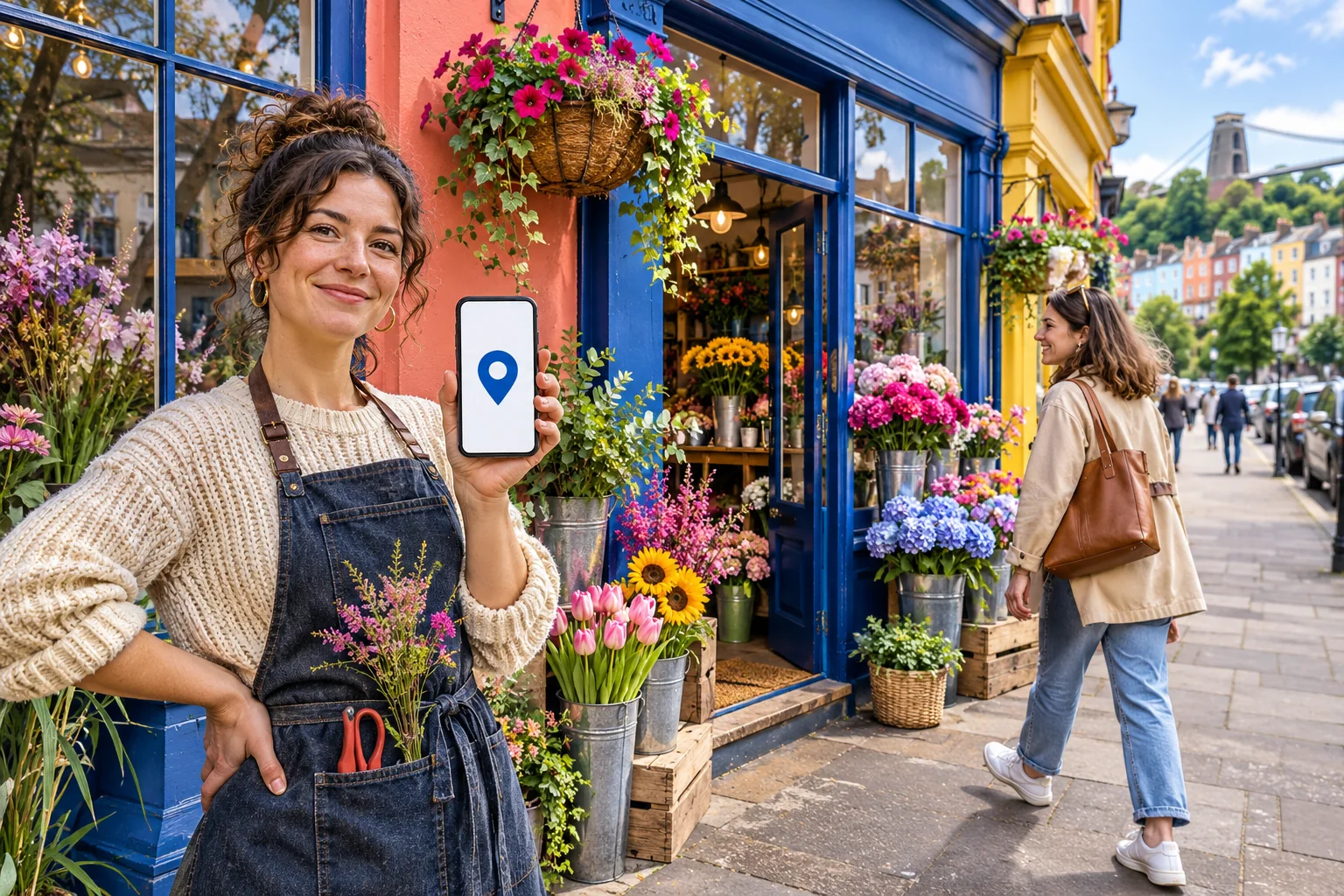
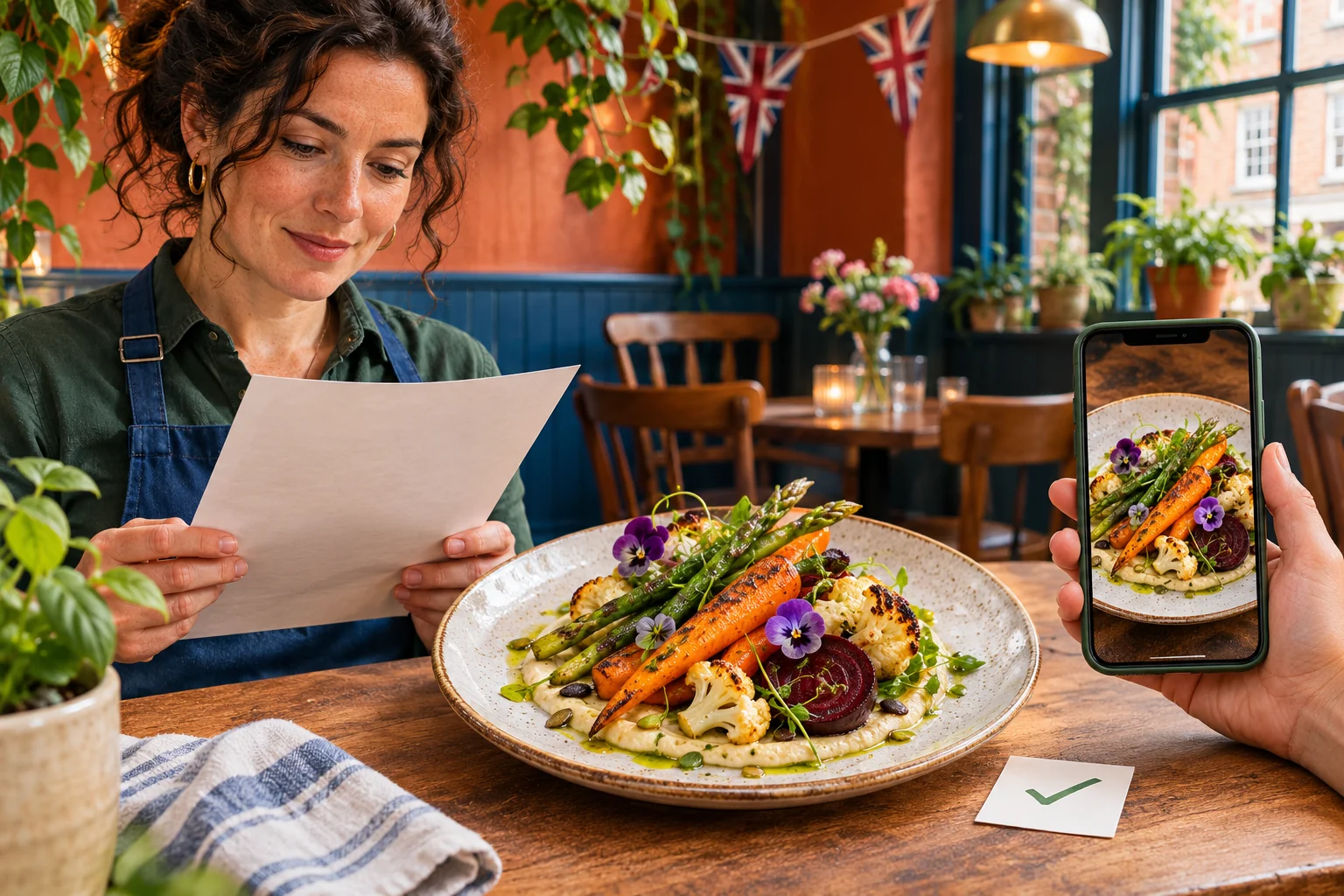
A public-information handoff sheet for a fictional Bristol café
| Customer touchpoint | Fact to verify | Responsible owner | When to correct |
|---|---|---|---|
| Dish photo and caption | Exact dish shown, name, portion and any stated price or availability | Kitchen lead and social editor | Recipe, plating, portion or offer changes |
| Current menu and allergen route | Approved menu and the way customers obtain current allergen information | Trained food-service lead | Ingredient, supplier or preparation process changes |
| Booking or ordering destination | Open service, item availability, total price and working next step | Front-of-house or ordering owner | Service fills, dish sells out or order terms change |
| Public question and follow-up | Who can answer, what must be escalated and which old posts remain visible | Duty manager | A customer question exposes an unclear or incorrect claim |
Give the menu post one honest job
A restaurant post has a narrower job than the restaurant's actual menu. It can show a dish, explain why someone might like it, and lead to current booking or ordering information. It should not become the only record for ingredients, allergens, prices or service availability. A photo can stay online long after the kitchen changes a recipe. Start by writing the single question this post answers: what is this dish, is it available now, or where can I ask before ordering? If the answer requires current staff knowledge, say where the customer can get that answer.
Imagine a fictional Bristol café serving a rotating vegetable lunch. On Monday its social editor photographs a roasted-carrot plate. On Wednesday a supplier changes a dressing ingredient; on Friday the dish is unavailable after lunch. The problem is not that Instagram failed to distribute the post. The problem is that an attractive image and caption can continue to imply Monday's dish and availability. The café needs a simple way to notice that gap and change the public invitation.
This ongoing menu task differs from launching a single product or announcing a local event. Those guides focus on a release or one date. A menu changes through ordinary service: substitutions, opening hours, portion adjustments and sold-out items. The goal here is a repeatable check between kitchen, front of house and social editor. A smaller set of correct posts can serve customers better than a busy feed that no one can keep current.
Set one current source of truth before taking photos
Give each featured dish an approved record that kitchen and front-of-house staff can find during service. It can be a maintained recipe sheet, menu-management system or controlled paper file. Record the dish name, current ingredients, supplier-dependent components, portion and presentation, price, availability window, and the way staff obtain the current allergen information. Name who approves a recipe change and who updates the public menu. The social editor should work from that record, not from memory or last week's caption.
Keep the dish record separate from a public caption. An ingredient list or allergen process may be more detailed than a social post can responsibly carry. The restaurant must provide accurate allergen information under the rules that apply to its food and sales route. The Food Standards Agency publishes guidance for food businesses in England, Wales and Northern Ireland; Food Standards Scotland provides its own guidance and training for Scottish businesses. Check the relevant current guidance for the business rather than assuming one fictional café's method suits every venue or food type.
Set a stop rule: if the chef, menu owner and social draft disagree, do not schedule the post yet. The person who knows the recipe updates the source record; the manager confirms the customer-facing menu and route; then the editor checks the final image and caption. This order prevents a social schedule from deciding food facts. A short written approval note with a date and dish version is enough for a small team, provided it is the version the next shift will use.
- Name one owner for the approved recipe and allergen record.
- Name one owner for live menu, prices and availability.
- Give the social editor a stop-and-check route when those records disagree.
Make ingredient and supplier changes reach the editor
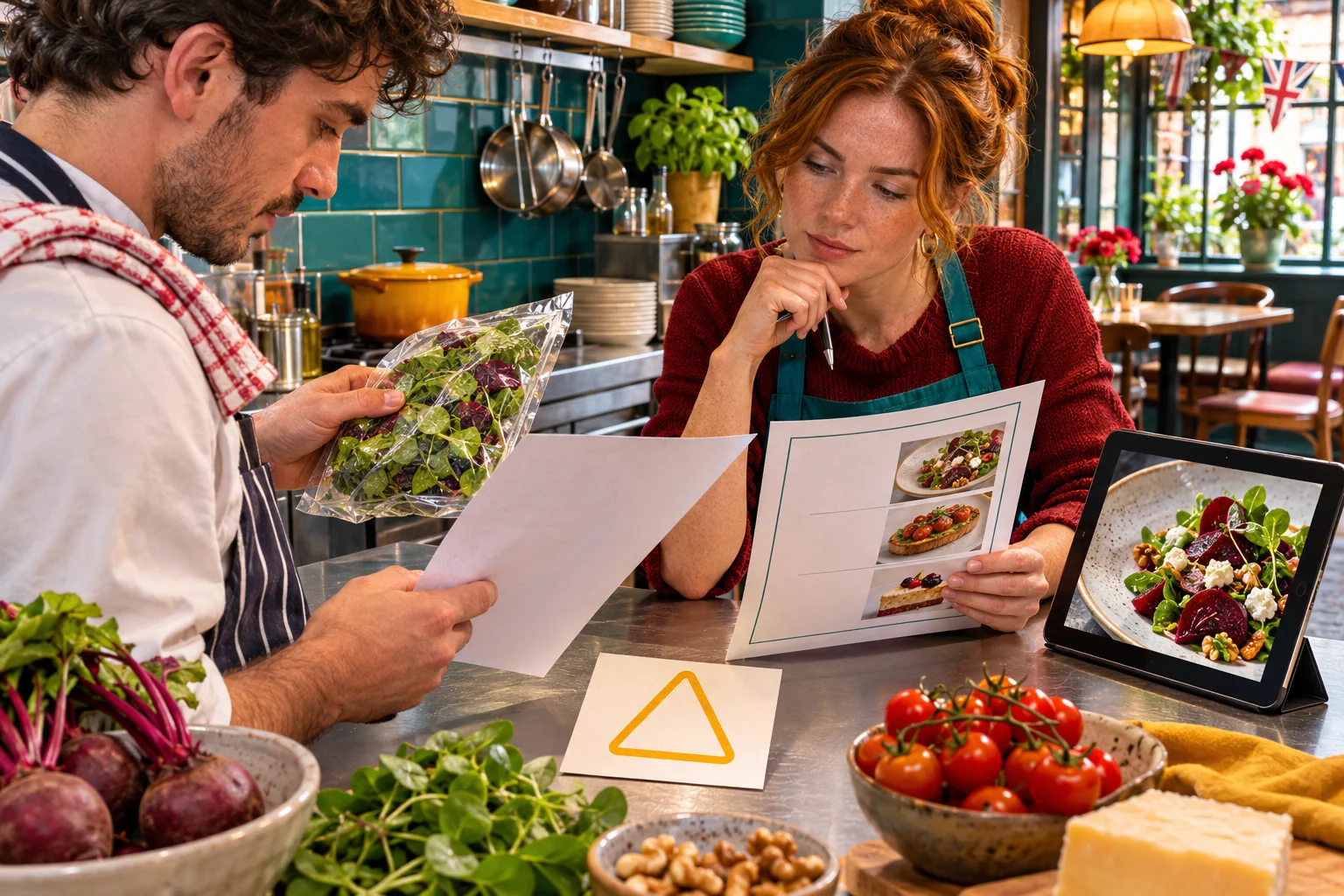
A supplier swap can change much more than a photograph. A new bread, sauce, garnish or oil may alter the ingredients, allergen information, appearance or description. Build the trigger into the normal kitchen handoff: when the recipe or supplier changes, the kitchen lead updates the approved record and tells the front-of-house and social owners before the item is promoted again. The image beside this section shows that handoff, not an invented food-safety certification.
For the fictional café, suppose the dressing for the roasted-carrot plate changes. The team pauses the scheduled Reel and checks the new ingredient specification, the current menu wording, the allergen record and the plated dish. This example deliberately does not declare which allergens are present or decide whether the dish is suitable for anyone. A trained member of staff must use the real business's current ingredients and procedures to answer a particular customer. If that answer is not available, the editor cannot solve it by writing a reassuring caption.
The FSA's updated out-of-home guidance recommends written allergen information supported by conversation and trained staff. That guidance is a reason to keep the kitchen record and customer route aligned; it is not a reason to copy a static list into every post and hope it remains true. Treat a changed ingredient as a correction trigger for the live menu, ordering path and any prominent social content that names the dish. A pretty old photo can remain as a record of a past meal only if it no longer misleads someone about today's offer.
Check the dish, portion, price and availability together
Before publishing, compare the actual served plate with the photograph. Check the main item, sides, garnish, size and any optional extras that appear to be included. If a photo shows an add-on or a larger portion, explain that clearly or use a better image. Descriptive words such as house-made or local need a current basis too. GOV.UK says advertising claims about a product must be accurate and supportable. The café should be able to show why its caption matches what a guest can order.
Price and availability need the same attention. A post that states a price should agree with the current public menu and any unavoidable charges; a claimed lunch window should match the service the kitchen can run. The UK Competition and Markets Authority's price-transparency guidance covers social-media posts as well as later buying steps. If the café uses market prices or variable portions, it should describe the offer in a way the customer can verify before ordering rather than leaving an old fixed figure in a pinned post.
Check substitutions and stock at the time a time-sensitive post appears. A lunchtime Story drafted the evening before can be wrong after a busy morning. The editor does not need to delete every historical dish photo, but an active invitation to order an unavailable plate should be corrected or withdrawn. When the restaurant can offer a different dish, show the new dish on its own merits; do not silently route people from the old photograph to a different product.
- Compare the photograph with the dish served today, including sides and garnish.
- Check the name, size, included items, price and service window.
- Correct or withdraw a post when a customer could infer an unavailable offer.
Give a clear route to current allergen information
Food-allergy questions deserve an accurate handoff, not a social-media guess. The FSA says food businesses need to give allergen information for food they sell and explains different requirements for non-prepacked food and distance selling. Food Standards Scotland says businesses must make information about the 14 regulated allergens available for non-prepacked food before purchase. The exact information process depends on how and where the food is sold. Check the relevant official guidance and the business's own trained food-safety lead before publishing a claim.
The post can tell customers where to find the current menu and how to speak with trained staff about an allergy or intolerance before placing an order. The restaurant should make that route easy to follow on a phone and during service. If it takes orders online or by phone, the allergen-information flow needs to be checked at the stages the applicable guidance describes, including before purchase and at delivery where relevant. A caption that says DM us without reliable trained cover is not a complete answer.
Avoid allergy safe, free from or similar reassuring labels unless the business has properly assessed and can support the specific claim. An old social image cannot account for a new supplier or preparation change. If a customer asks whether a dish suits their particular needs, direct them to trained staff who can check current ingredients, preparation and cross-contact controls and make the necessary order handoff. If the team cannot verify the answer, it should say so rather than infer safety from the photograph or a past comment.
- Give the customer a visible route to current allergen information before ordering.
- Route specific questions to trained staff and current kitchen records.
- Do not use a social caption or generic badge as an individual safety assurance.
Make the photograph useful, recognisable and accessible
A dish photograph should show what a customer needs to recognise: the current portion, main components and any included sides. Use light that makes the food clear without changing its apparent colour or size. A chef's garnish can make a photo attractive, but if that garnish is unavailable or varies by service, the caption and current menu need to make the offer plain. Avoid stock photography of a different dish and do not present a plated sample as the guaranteed appearance of every order.
Write a caption that answers the customer question in ordinary words. Name the dish and, if relevant, when it is served; point to the current menu and allergy-information route. Keep detailed terms in the destination rather than in tiny image text. Where Instagram provides alt-text controls, describe the informative parts of the photograph accurately. Spoken Reels need readable captions that match what is actually said. Test the post with sound off and on a small screen before treating it as ready.
Do not let a decorative overlay hide the food or the route to information. A carousel can use one card for the plated dish and another for a clearly labelled service detail, but that extra card still needs review whenever the fact changes. A staff member should be able to identify which public image matches the currently approved recipe. Accessible, honest presentation is part of the same accuracy routine, not a separate design flourish.
Choose the Instagram format by the customer's question
A still post is often enough to show the exact plate and its current name. A carousel can compare two genuinely available lunch choices or explain what comes with a meal. A short Reel may show an actual preparation step or plating sequence when the movement helps someone understand the dish. A Story can carry a same-day update if staff can remove or correct it when stock changes. Choose the format for the information it conveys, not because a particular format is said to guarantee reach.
Check every control on the account you actually use. A Story Link sticker may point to a current menu, but test it after publication; a Reel caption's web address may not work as a tap target the way a sticker does. The profile link can lead to a current menu or booking page if the visitor can find the advertised dish quickly. If a control is unavailable, use a simpler route and explain it in the caption. Do not send a customer through several pages to discover the item has sold out.
Meta offers Instagram best-practices guidance in the professional dashboard, but general platform tips cannot verify a restaurant's recipe or service capacity. Set a publishing rhythm that the kitchen and manager can support. A restaurant may prefer one reliable weekly dish feature plus same-day corrections to a daily queue of photographs that cannot be checked. The post's value lies in the clarity of the decision it helps a diner make.
Test the route from post to booking or ordering
Follow the whole path as a first-time customer on a phone while logged out. Can you identify the same dish, see its current price and availability, and find how to book or order? Is there an understandable route to ask about allergies before committing? Does the destination reflect the same service period as the post? A working link is only the first check; a link to a stale menu still leaves the customer with the wrong information.
The fictional Bristol café can use a small handoff sheet: post URL, dish version, current menu URL, booking or order route, approval owner and next review time. A reservation page may confirm a table but not a particular dish. Say that if the dish cannot be reserved. A takeaway ordering page may display today's stock and collection time; check the actual order step, not a screenshot from an admin preview. Keep the link and the promise aligned.
For customers who prefer a human answer, give a staffed contact path and realistic response expectations. The restaurant should not ask for sensitive medical history in a public comment thread. The existing UK customer-enquiry guide explains how to assign responses and avoid lost handoffs; the booking-link guide covers the route from profile to reservation. Here the added test is whether the menu fact survives the journey from a photograph to the real service.
- Open the post and its link on an ordinary phone while logged out.
- Check booking or ordering availability and the current menu reached by the link.
- Record who will correct the public path if service changes.
Answer comments and private questions without guessing
A question under a dish photo may be simple: Is this served on Sundays? The front-of-house owner can check the current service and answer. An allergy or ingredient question needs a different route. A social editor should not infer from a photo, old recipe or customer comment. A useful first reply explains how the customer can contact trained staff for the current ingredient and preparation check before ordering. The staff member handling the enquiry should know how to pass the requirement through the business's established food-safety process.
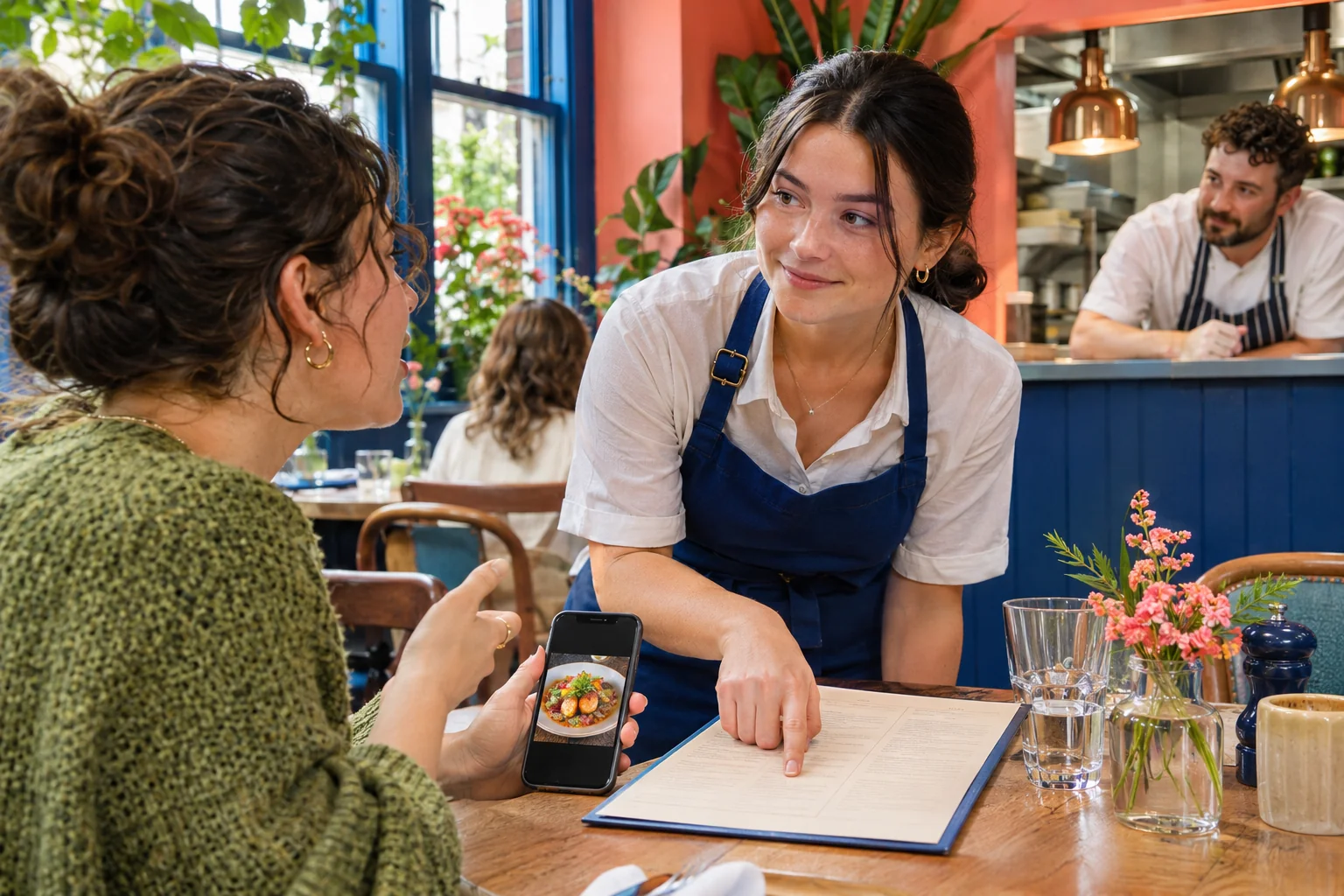
The server-and-customer image beside this section shows the handoff: interest began with a food photograph, but the answer is checked against today's menu and kitchen. It does not claim the depicted meal is suitable for the customer. If a customer asks privately, keep any order or personal details out of public replies. If the team cannot confirm a fact during a busy service, give a realistic follow-up route rather than an immediate yes.
Watch for repeated questions that reveal a weak caption or broken destination. If several people cannot tell whether a meal is available for collection, the public route needs clarification; answering each DM separately leaves the original ambiguity live. If a comment exposes a factual error, correct the post where possible and coordinate with the menu owner. Moderation controls can help with abusive comments, but they do not replace a truthful answer or an escalation process.
Correct old posts when the menu changes
A change log makes corrections possible without a large marketing team. Record the change, which dishes it affects, when it starts, who approved it and which public touchpoints need review. Those touchpoints may include a pinned post, carousel, Reel caption, Story Highlight, menu page, booking text and an ordering platform. Assign one person to confirm the public route is consistent after the change. A recipe update in the kitchen alone cannot fix a caption that still names an old ingredient.
Prioritise the posts most likely to be read as a current offer. A pinned lunch Reel or Highlight titled Menu is more likely to mislead than a clearly dated historical photo. Edit the caption or destination when the platform allows it and the result remains clear; otherwise add a visible correction or withdraw the item. Do not quietly replace a dish's linked destination with an unrelated meal. The guest should be able to understand what changed without comparing screenshots.
Review the planned queue as well as published content. A scheduled image may be perfectly shot and still wrong at tomorrow's service. The duty manager can run a brief pre-service check of featured dishes, availability and links; the editor can then pause anything unverified. This is more dependable than a fixed posting quota. Preserve a dated note of the approved version so the next shift does not resurrect a claim that was already corrected.
- Check the post, pinned content, Story Highlights and destination after a change.
- Correct or withdraw a misleading item and tell staff what changed.
- Keep a dated approval note so the next shift knows the current version.
Measure useful enquiries and keep follower services separate
Review the outcomes the restaurant can actually observe. Count enquiries that reached trained staff, bookings confirmed in the reservation system, orders for the featured dish, and corrections required after publication. These records can show whether a post answered a useful question and whether the handoff worked. Keep Instagram's reach, views, likes and follower count as separate platform signals; they do not establish that a diner ordered, that an allergy question was resolved, or that a particular post caused a sale.
The Bristol café might compare two weeks of posts by asking whether menu links worked, whether staff received answerable questions, and how many old offers needed correction. Those are workflow checks, not a fabricated performance claim or a promise of more customers. If the restaurant lacks reliable attribution, record that limitation. A clear correction process can be a practical success even when social metrics do not move, because people no longer encounter an inaccurate invitation.
HitsBoost's UK Instagram follower options are a separate profile-count service for businesses that choose to compare them. A purchased count does not verify a dish, supply trained staff, guarantee local reach or create orders. Menu accuracy and the customer's route to current information come first. If the café later reviews a service, it should understand the package terms and assess its real business outcomes independently of the profile number.
Frequently asked questions
Should a UK restaurant put every allergen in an Instagram caption?+
A social caption is not a dependable substitute for the business's current allergen-information process. Give customers a clear route to up-to-date information and trained staff before they order. Follow current FSA or Food Standards Scotland guidance for the food and sales route involved.
Can staff answer an allergy question in Instagram DMs?+
They should not guess from a photograph or old caption. Route the question to trained staff who can check current ingredients, preparation and the business's records, and make sure any order requirement is passed through the proper process.
What if an ingredient changes after a dish Reel is posted?+
Review the current menu and allergen record first, then correct or withdraw any active post or destination that has become misleading. Tell the duty team what changed so replies and orders use the same version.
Can I keep a sold-out dish in an Instagram Highlight?+
A clearly historical photograph can remain, but a Highlight that reads as today's menu should be corrected or removed when the dish is unavailable. Check its caption, link and title together.
Should a restaurant use posts, Reels or Stories for menu items?+
Choose the format that answers the customer's question. A still photo may show the exact plate best; a Reel may explain preparation; a Story may carry a same-day update if staff can maintain it. No format guarantees orders or reach.
What should be checked before adding a booking or order link?+
Open it on a phone while logged out. Check that the dish, service period, price, availability, next step and route to current allergen information match the post. A working link to an old menu is still a problem.
Do UK rules differ between restaurant meals and packaged food?+
They can. Requirements depend on how food is packaged, presented and sold. Check the current official guidance and your food-safety lead for the particular item rather than applying a fictional example to every product.
Will buying Instagram followers bring more restaurant bookings?+
No package can guarantee local reach, bookings, orders or sales. Follower count is separate from menu accuracy, safe customer handoff and business results. Compare service terms only after those customer-facing basics are working.
Compare Instagram Followers packages.
Prepare the public destination, then review the quantity and terms that fit your goal.
Compare UK Instagram follower options separately