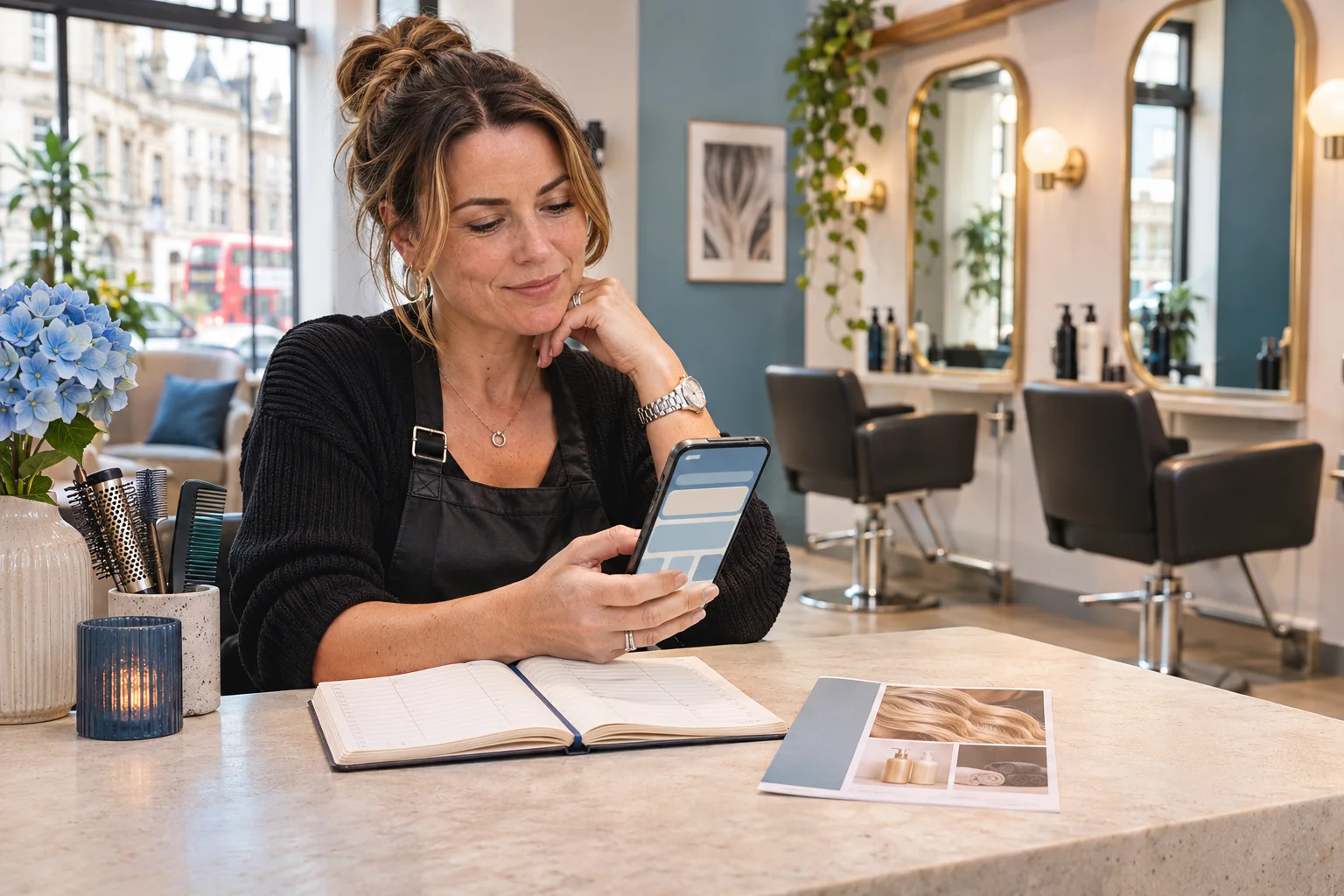
Pre-publication sheet for a fictional Manchester salon's non-medical haircut comparison
| Check | Evidence to keep | Hold the post if |
|---|---|---|
| Scope | Exact cut-and-style service, model/client and date of each photograph | The two images show different services or an unknown interval |
| Permission | Client's documented decision for the exact images, account and intended reuse | A general booking form is the only permission found |
| Photography | Original files, matched angle and lighting notes, and an edit log | A filter, extensions or different light creates the apparent result |
| Claim | Approved caption and evidence for each stated or implied effect | The pair implies a typical or lasting result the salon cannot support |
| Destination | Live booking link with current service description, price and conditions | The page names a different service or an unavailable appointment |
Understand the visual claim a comparison makes
A reader sees two pictures before reading the full caption. Put a dishevelled hair photograph beside a polished style and the pair can imply that one appointment caused the entire difference. It may also suggest the change is typical or durable. The fictional Manchester salon wants to show a cut and blow-dry, not claim a hair-growth treatment or a lasting change to hair texture. Naming that narrow purpose first prevents a photograph from making a broader promise by accident.
ASA/CAP guidance treats before-and-after photographs used in marketing as claims that need support. Labels are not the whole story: the overall impression matters. If the 'before' image is dim and untidy while the 'after' image is brightly lit, professionally styled and digitally smoothed, the images may imply a greater effect than the service produced. A small disclaimer cannot necessarily undo that first impression. Review the pair on its own, then with the caption and booking page.
This guide is for ordinary non-medical salon services such as a haircut and styling. It is not a template for injectable, prescription-only, clinical or health-treatment advertising. Those categories have separate rules and can be unsuitable for public before-and-after promotion. If the salon provides such services as well, keep this workflow confined to the named hair service and obtain specialist advice for the other work.
Choose a comparison that answers a real customer question
A comparison can show the shape of a fringe or layered cut. It is less useful when the difference mostly reflects a changed camera angle or temporary product. Before planning a post, write the question a viewer should be able to answer. The Manchester salon chooses: 'What shape can this cut and finish create on this model's hair today?' That is narrower than promising the same result for every head of hair.
Decide whether a pair is the right format at all. A short clip of the stylist shaping a fringe may explain technique better than two stills. A single clear finished photograph with the service named may be enough if a baseline adds no fair information. The comparison must not be forced merely because a dramatic split image attracts attention. If the first photograph would embarrass the client or create pressure about their appearance, choose another way to explain the service.
Use the pre-publication sheet above as a stop/go tool. The first row asks whether the two images genuinely relate to the same service and person. The last row checks the booking destination. A beautiful pair that sends visitors to a different treatment is not useful. The goal is an accurate visual explanation that stands alongside a current service description, not a transformation story invented to decorate a promotional post.
Get specific client permission before photo marketing
A client agreeing to a haircut does not automatically agree to become the face of an Instagram promotion. The ICO's small-business example distinguishes using customer information to fulfil an order from using identifiable customer photographs in a marketing campaign. It says the business must consider a separate lawful basis for that new purpose; in its example, the business chooses consent. The right lawful basis depends on the actual circumstances, so do not treat a generic release form as a substitute for a data-protection assessment.
Make the conversation concrete. Show the exact proposed pair and draft caption, say which public Instagram account will carry it, whether the salon might boost it as an ad, and whether it could be reused in Stories or a booking page. Give the client a real choice without conditioning their ordinary appointment on the answer. Record the decision, date, scope and contact route. If another person is identifiable in the frame, consider their rights too; crop or reshoot rather than assuming the paying client can authorise everyone else.
A private permission record should be easy for staff to find without being posted publicly. Agree who can approve later uses, what happens if the client objects, and how a correction or removal request reaches the account owner. A client may agree to a feed carousel yet decline paid advertising or a year-old resurfacing. Respect the narrower choice. If permission is unclear, hold the post and use a mannequin demonstration or a service explainer instead.
- Show the client the exact image pair and proposed caption before asking for a decision.
- Record where the salon may publish it, whether paid use is included and who handles a later objection.
- If the proposed use changes, ask again rather than treating a broad booking form as a blanket release.
Set matched conditions before taking either photograph
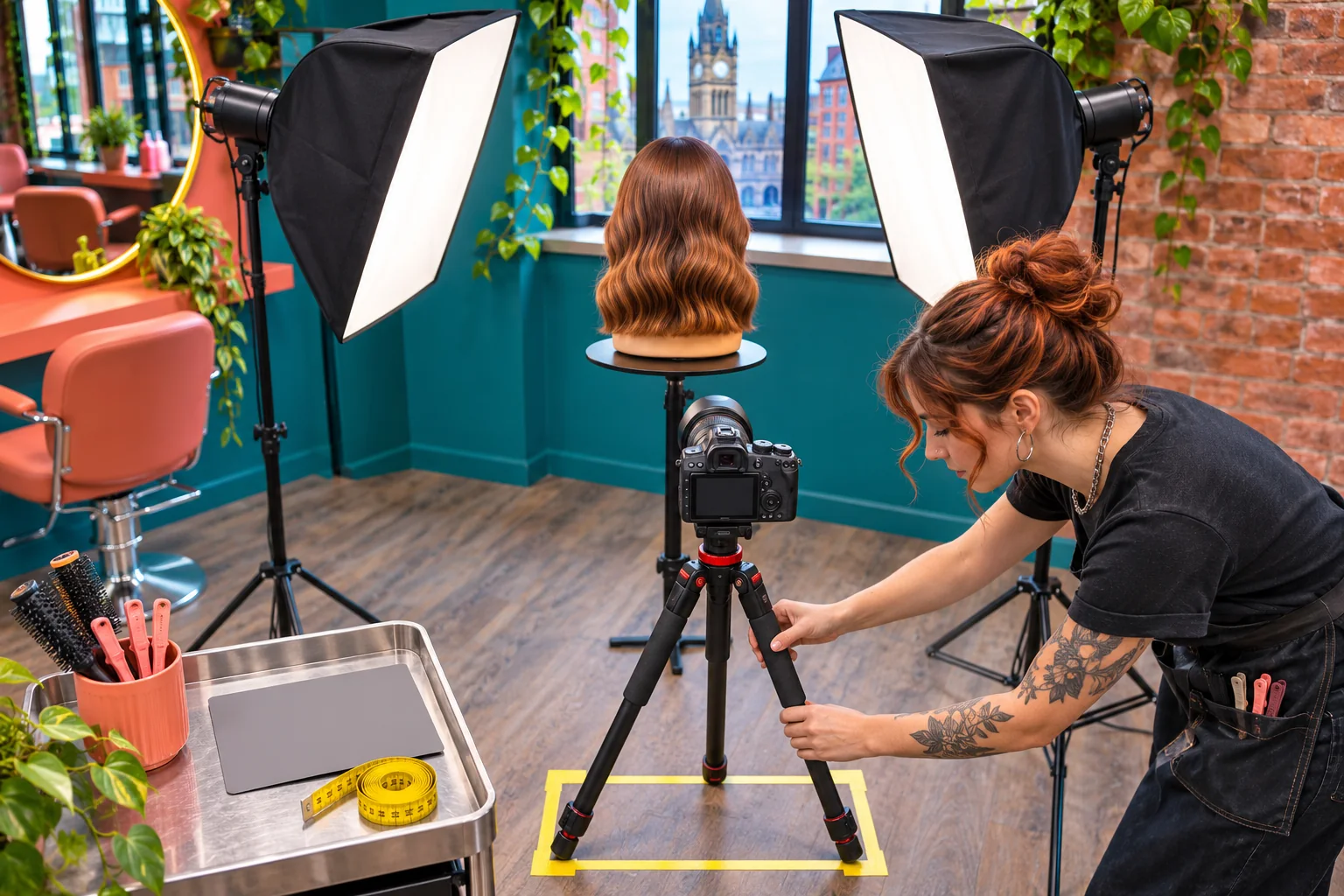
The first inline scene shows a stylist marking the tripod position while a mannequin head sits between two soft lights. It illustrates a repeatable setup rather than a result. Record the camera location, height, lens or phone setting, distance, background and lighting. A bright window in one shot and a warm overhead lamp in the other can make hair colour or shine look different even when the service has not changed. Move to a consistent area or explain a necessary difference before the comparison is approved.
Match the pose and presentation as well as the camera. Photograph the same side and similar head tilt, with the hair visible rather than obscured by clothing or a hand. If the 'after' image uses extensions, a different styling product or a professional finish beyond the booked service, state that clearly or omit the misleading pair. ASA guidance specifically flags production techniques that exaggerate the relevant effect, including excessive hair inserts in hair-care advertising. The salon should not use a photo setup that quietly supplies the result it wants to claim.
Keep the original image files and a short setup note. A simple record may say 'north-facing salon bay, two matching soft lights, camera marker A, no beauty filter, same person and angle'. It need not become a large production manual. Its purpose is to let a later reviewer distinguish what the service did from what photography and styling did. If the pair cannot be made comparable, choose a single honest finished image or an explanatory Reel instead.
- Use the same camera position, focal length, angle, distance and background where practical.
- Match lighting and hair presentation; record any necessary difference in the caption.
- Keep original files and an edit log rather than only a flattened social-media export.
Capture and store a genuine pair
Photograph the baseline immediately before the named service, with the client's permission, and the finish at a clearly stated point afterward. Note the date and interval. Do not pair an old photograph from another season with a new styled one simply because both belong to the same client. The salon's fictional example is one appointment for a cut and blow-dry, so the caption should not imply a long-term result. If later maintenance or at-home styling is needed to keep the look, say so when relevant.
Save the originals securely with a reference that connects them to the permission and service record. Keep a copy that has not been cropped, filtered or compressed for Instagram. ASA/CAP says marketers should hold signed and dated proof that before-and-after photos are genuine and have not been manipulated. It also expects support for the impression the images create. A folder containing only a final collage will be weak evidence if someone later questions what was done to the pictures.
Do not upload the entire client consultation or private notes to a social-media planning tool just to keep the photographs together. Store only what the salon needs, restrict access to the team responsible and follow its own retention policy. An image pair is personal information when the person is identifiable. A useful editorial record can be brief: image IDs, appointment date, exact service, permission scope, edits made, caption version and approval owner. It should protect the client as well as the business.
Edit for clarity without changing the apparent result
Instagram offers photo and carousel editing tools, including filters. Meta has described these as creative options, but their availability does not make every use suitable for a commercial comparison. A modest exposure correction applied consistently to both photographs may make them easier to see. A filter that deepens the 'after' colour, smooths hair, changes skin tone or hides flyaways directly tied to the service can exaggerate the result. The question is what impression a viewer receives, not which menu button was used.
Keep a record of crops and edits. Check whether the crop hides an extension, a clip or an untreated side that would change the viewer's understanding. Compare the original pair, the edited pair and the final phone-sized post. If the result looks more dramatic because the 'after' frame alone was brightened or retouched, revert the edit or stop the comparison. ASA/CAP guidance says before-and-after imagery can mislead through pre-production as well as post-production choices.
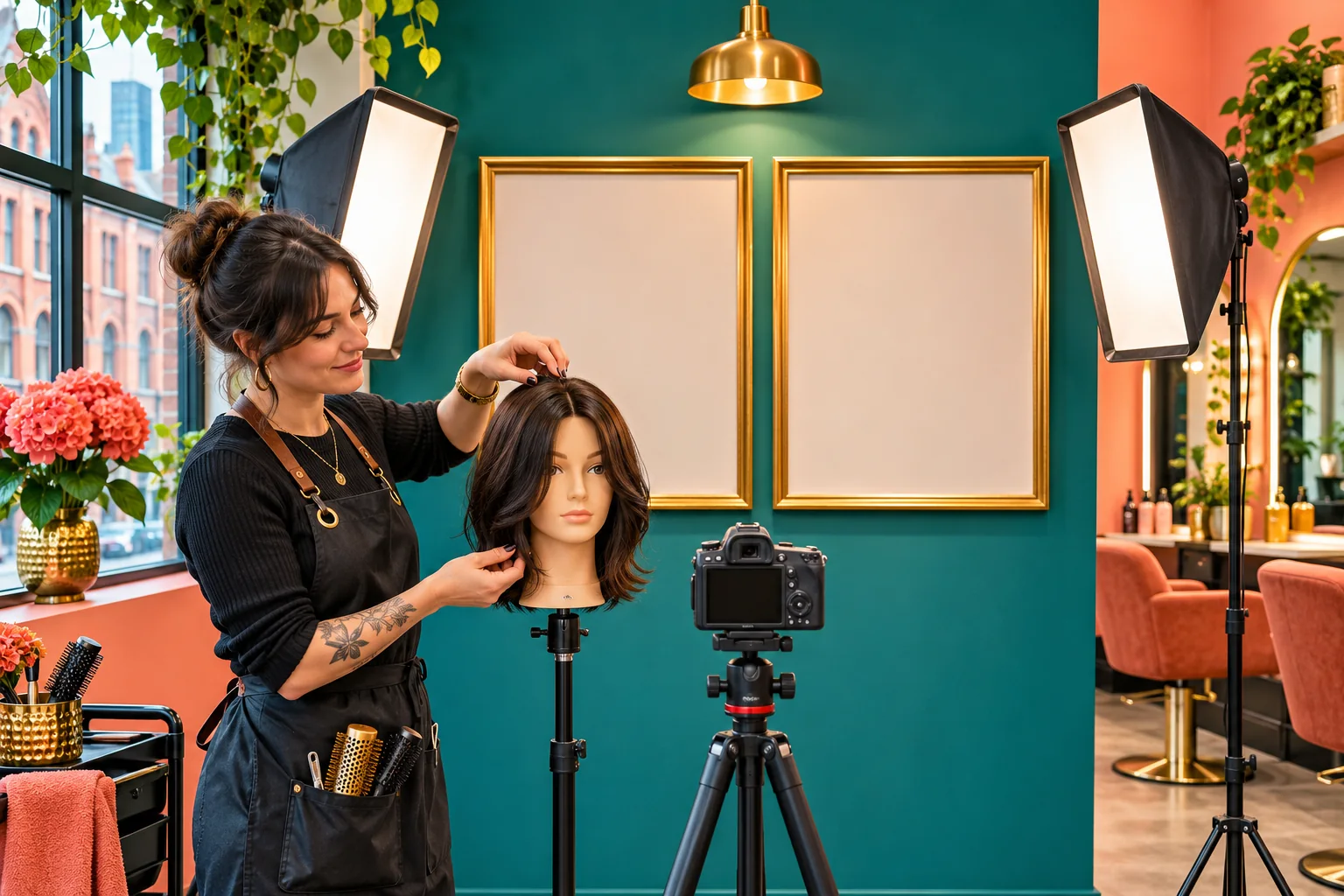
A standard brand colour treatment across the whole feed is still subject to the same overall-impression test. Do not assume a label such as 'illustrative' can fix a picture that depicts a real client's outcome inaccurately. Conversely, this guide's own images show a mannequin and blank cards because no real customer result has been supplied. The salon should publish a genuine pair only when it can explain each visual difference and substantiate what the post implies.
Check that the service claim is supportable
Write down every claim the pair could convey before writing a catchy caption. Does it imply that one cut permanently changes volume, that a hair product repairs damage, or that everyone will receive the same shape? The Manchester salon can support a narrower statement: 'This shows the cut and finish on one client at this appointment.' It should not turn a single example into 'guaranteed volume for all hair types'. Individual hair, the stylist's work and home care vary. A photograph of one head cannot prove a universal outcome.
ASA/CAP says before-and-after images are treated as objective claims and should not exaggerate what consumers can generally obtain. The salon should examine the full impression, including any music, cover frame, carousel order and booking page. If a testimonial adds a health or efficacy claim, that claim needs its own support. Do not hide a limitation in tiny final-slide text while the first frame makes an unqualified promise. Remove or narrow the claim until the image and words agree.
Use the table's claim row as a genuine hold point. The reviewer can ask: what exact service was performed, were extensions or a separate treatment involved, when were the photographs taken, and what evidence supports the caption? If the team cannot answer, the pair is not ready. A less dramatic but truthful service photograph is more useful to a customer deciding what to book than a spectacular comparison that omits a material part of the work.
- Name the exact service shown and what the images actually demonstrate.
- Check whether extensions, styling products, time, maintenance or another service contributed to the appearance.
- Remove an unsupported typicality, duration or health claim before publishing.
Approve the exact pair and caption with the client
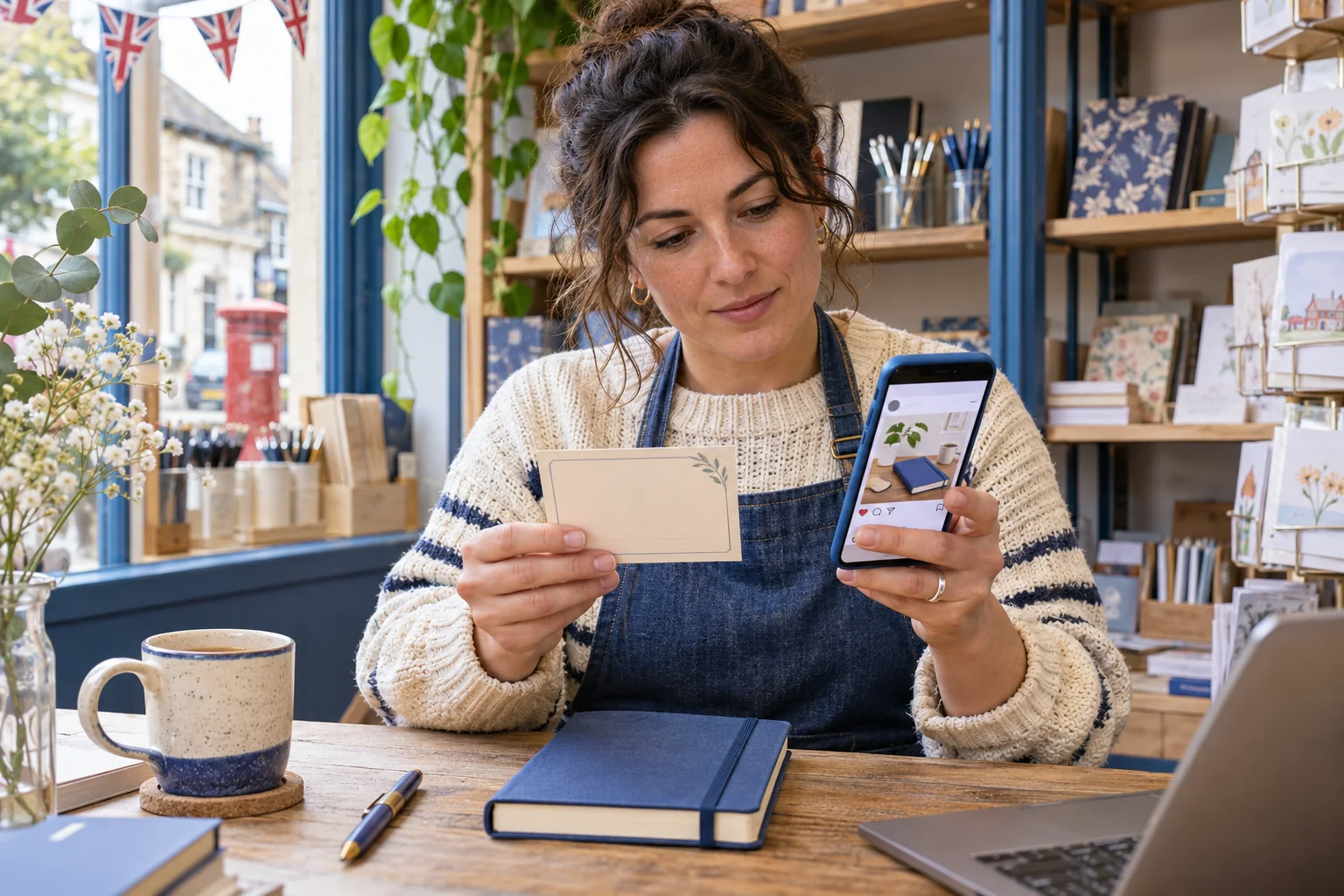
The second inline photograph shows a client looking at blank cards beside an unfilled permission form. It is a planning scene, not an actual customer result. In the real workflow, show the client the finished pair at the size and order in which it will appear, along with the caption, tags and intended channel. Do not rely on a verbal 'sure, post it' from before the images were taken if the finished crop or wording changes what the client is being asked to endorse.
A clear caption names the service and timing in ordinary language. For example: 'One cut and blow-dry on this client, photographed before the appointment and after the finish under comparable light. Results and styling needs vary; ask about your own hair before booking.' That is an illustrative draft, not a description of a real client. Avoid invented numbers, 'miracle' language or a false claim that all hair will behave the same way. If the images include extensions or another paid service, identify that contribution rather than concealing it.
Check tags and location details separately. The client may allow a photo but not want their handle, name, workplace or exact appointment date published. The salon can remove those details while retaining a useful explanation of the haircut. A booking link should lead to the actual service page and current terms. Keep the approved caption and client response with the photo record so another team member does not later repost an older, broader version by mistake.

Build an accessible carousel that keeps the comparison fair
A side-by-side collage can shrink the hair detail until neither image is understandable on a phone. Consider a carousel with a short opening explanation, the baseline and finish at comparable size, and a final slide that names the service and current next step. Check that viewers can understand the relationship even if they do not tap every slide. Do not put essential conditions only in a tiny graphic; place them in the caption where they remain readable and can be corrected if needed.
Write alternative text for each informative photo when the current Instagram interface permits it. Describe the visible hairstyle, angle and relevant context without announcing a medical or typical result the image cannot prove. For example, 'Side view of dark shoulder-length hair before a fringe trim' is more useful than 'amazing makeover'. If a slide contains text, put that important information in the caption too. The Global alt-text guide explains the separate app control; this guide's task is to make the comparison understandable and honest.
Review the post on a normal phone with the same crop and sequence a visitor will see. Check that no interface control covers a key detail, that the first slide does not overclaim, and that the caption is not contradicted by an old link. A colleague should be able to name the service, the images' limits and the booking route. If not, simplify before publishing.
Publish, monitor questions and correct the record
Before the final share, confirm the account, the exact approved image files, the client permission scope and the current booking destination. Then open the live post from an ordinary visitor view. A draft preview can differ from the published crop, carousel order or link. If the client had agreed only to an organic feed post, do not later boost it, reuse it in an ad or place it on another account without checking that separate use.
Monitor the questions the pair actually raises. If people ask whether extensions were used, whether the finish requires daily styling or whether the price includes a colour service, answer from the approved record and improve the caption or booking page if needed. Move private client or order details into the normal support channel. Do not use a comment thread to reveal the featured client's consultation or personal circumstances.
If the client objects, the image is found to be misleading or the booking page changes, identify all places where the pair appears. Correct or remove the affected post through the platform controls available to the account and update the current service information. Keep a small record of the issue and action. A fresh Instagram post does not automatically repair an older inaccurate one, and a large view count is no reason to leave a known misleading visual claim online.
- Reopen the live post and the booking destination from an ordinary phone.
- Keep the approved image pair, caption version, permission record and source files together.
- Correct or remove a misleading post promptly and route private cases through support.
Keep profile counts separate from salon evidence
The salon can use questions, booking-page visits measured reliably and verified appointments to learn whether its explanation helped customers. A follower total alone cannot show that the photographs were truthful or that someone understood the service. The number may rise for many reasons, and a person who books may have met the salon through a recommendation or local search before seeing Instagram. Record the exact post, period and business evidence rather than assigning every enquiry to a dramatic image pair.
HitsBoost's UK Instagram follower packages are a separate visible-count service for a business that chooses to review them. They do not provide client permission, substantiate a beauty claim or guarantee UK customers, recommendations, bookings or sales. Check the current package terms and checkout independently. A sound salon post should stand on its genuine images, fair presentation and accurate service route even if no package is purchased.
Return to the editorial question after publication: did the comparison answer what the salon promised to explain? If readers still ask about the cut's maintenance, add that information to the service page or make a short, fact-checked follow-up. If the salon cannot make a fair comparison for a particular appointment, use a single consented result photograph or a process explainer instead. Honest evidence is more valuable than filling a content calendar with transformations.
Frequently asked questions
Can a UK salon post before-and-after photos on Instagram?+
A non-medical salon can consider doing so when it has appropriate rights and a lawful basis for identifiable photos, the client understands the proposed use, and the image pair does not mislead about the service. Review the exact comparison, caption and destination before posting.
Do I need the client's permission if they paid for the appointment?+
Payment for an appointment does not itself authorise marketing with the client's identifiable photographs. Consider the lawful basis and ask about the specific photo and channel use; document the decision and respect a refusal.
Must the two photos have identical lighting?+
They should be comparable enough that light, camera angle and presentation do not create the apparent effect. Use a repeatable setup where practical and explain any material difference. If a fair comparison is impossible, use a single honest image.
Can I use an Instagram filter on the after photo?+
Do not use a filter that makes the service look more effective than it was. ASA/CAP focuses on the overall impression, including editing and production techniques. A consistent technical correction is different from enhancing the result shown.
Is one client's result proof that every client will look the same?+
No. A genuine pair can show one person's appearance at the stated times, but it does not establish a typical or guaranteed result for every hair type. Keep the caption specific and substantiate any wider claim separately.
Can I repost the pair in a Story or paid ad later?+
Only after checking the recorded scope of the person's permission and the implications of that new use. An organic feed permission should not be treated automatically as approval for a paid ad or another channel.
What if the client asks for the photos to be taken down?+
Route the request to the account owner promptly, check all uses of the images, and act under the salon's privacy and permission process. Correct or remove an inaccurate or unauthorised post; keep a record of the request and action.
Will buying Instagram followers make a before-and-after post convert?+
A follower package addresses a visible profile count. It does not make a visual claim true, secure photo permission, guarantee reach or create bookings. Judge the post against its evidence and verified customer questions or appointments.
Compare Instagram Followers packages.
Prepare the public destination, then review the quantity and terms that fit your goal.
Review UK Instagram follower options separately