One-page Instagram media kit: what a partner can verify
| Block | Include | Keep out |
|---|---|---|
| Identity and fit | Public handle, subject, location served and a working contact route | An unverified claim that every follower lives nearby |
| Work samples | Two or three public posts or approved examples with your role | Unlicensed client assets or a fabricated testimonial |
| Audience evidence | Dated Insights period, exact metric labels and any available geography | A screenshot with no date or a guessed UK percentage |
| Partnership options | Formats you can make and a route to request a specific brief | A promise of views, sales or algorithmic priority |
| Commercial terms | A note that rates, rights and disclosure are agreed per project | A vague 'all rights included' statement without scope |
Start with the decision a brand needs to make
A media kit is useful when it helps a potential partner decide whether to ask for a proposal. It is not a certificate that an Instagram account has influence. Put your public handle, the work you make, the audience you hope to serve and your contact route on the first page. A local café should be able to tell whether you actually make food-and-place photographs or short videos and whether your work could fit its customers. If the first page is only a large follower number, the partner must do the important checks itself.
Separate the kit from a campaign brief. The kit explains your existing work and evidence. A brief specifies what one partner wants to commission: the subject, format, date, approval process, links and intended use. A creator can reuse a truthful kit across enquiries, but each collaboration needs its own agreed details. This distinction avoids presenting a generic rate or example post as a promise of a result for a particular shop.
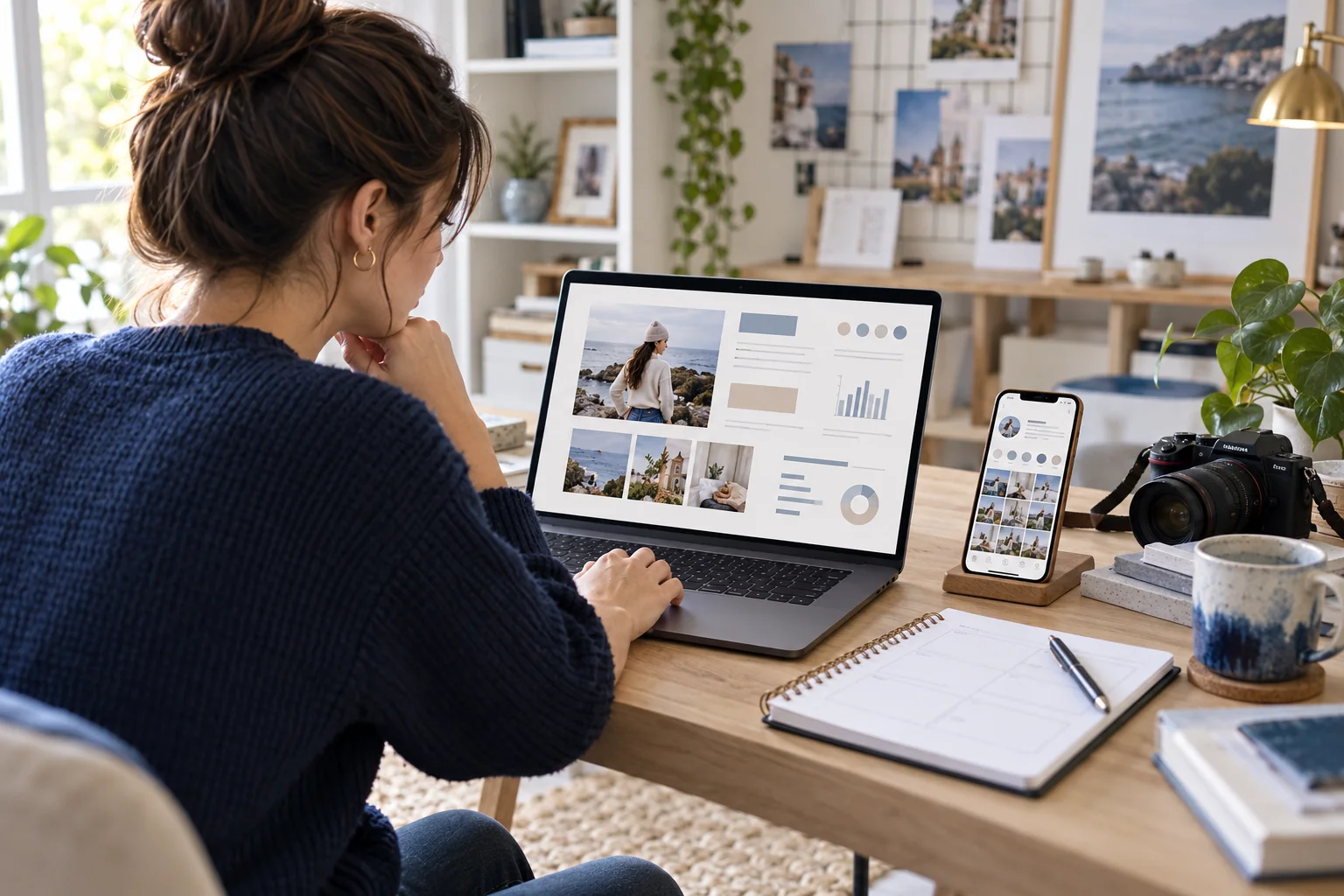
Think of a fictional Manchester photographer who makes short Reels and photographs of cafés and day trips. She wants to work with independent hospitality and visitor businesses. Her kit should show the kind of content she can produce, public examples and where her actual audience is when Insights provides that information. It should not claim that every viewer is in Greater Manchester or that a collaboration will fill tables. The example below keeps performance cells blank because no real account data exists for this fictional creator.
- A clear creator niche and a public profile a partner can inspect.
- Dated, named evidence rather than unexplained screenshots.
- A simple route to request a brief and discuss terms.
Choose a creator identity and a realistic UK fit
Write one sentence that a reader could verify from your public profile. For example: 'I make original food and place videos for people interested in independent cafés and day trips.' Add your working location only if it helps explain where you can film, visit or attend an event. Being based in Manchester does not prove that a majority of followers live there. If a partner needs customers near one store, audience geography and the partner's own distribution plan deserve a separate check.
Show what account you use and what it lets you inspect. Instagram has personal, creator and business account types, and available professional tools can differ. Meta described its creator marketplace expansion to the United Kingdom in 2024, including creator portfolios and brand searches, but access and current controls depend on eligibility and the account. A standalone media kit remains useful if the marketplace does not appear for you. Do not claim a feature is open to every UK creator because a news announcement described a rollout.
Avoid filling a page with location names simply to look local. Name the cities or regions where you genuinely work, the type of business you understand and any travel limit that matters. If you work remotely, say so. If a brief involves a physical venue, check dates, transport and access before promising a visit. A brand can then judge fit on a real operational basis rather than on a decorative map or an unexplained 'UK audience' badge.
Make your public profile easy to verify
Open the profile as someone who does not manage it. Check the handle, profile photo, bio, recent work and the link or contact button a partner would use. Remove an expired offer, broken portfolio link or old location if it gives the wrong impression. The kit and profile should describe the same creator. If your display name changed, add the current handle to the kit rather than expecting a brand to guess which account is yours from an old screenshot.
Choose two or three examples that represent the work you want to sell, not merely the posts with the largest visible counts. A strong sample makes your role clear: idea, filming, illustration, editing, caption or presentation. If another photographer, editor or client contributed, do not silently take credit for all of it. Link to the public post where possible; if it was unpublished client work, get permission before including a preview or a name in a pitch.
Keep account access private during outreach. A brand may need a public link, a dated Insights export or a controlled screenshot. It does not need your password, recovery codes, session cookie or full access to the profile to assess a media kit. If a prospective partner asks for access before a clear agreement, pause and use Instagram's own collaboration or business tools only after you understand the exact permission being requested. Protect the evidence as well as the account that produced it.
Date your numbers and name the metrics
A brand cannot compare two screenshots when neither says what period it covers. For each Insights item, record the account, date range, date captured and exact metric label shown at the time. Keep the definition close to the figure: followers describe accounts following a profile, reach describes accounts shown content under the platform's current definition, and interactions describe particular actions. Those are different observations. Do not combine a Reel view count with profile followers and call the sum an audience size.
Meta's professional dashboard includes educational guidance about creation, engagement, reach and account performance. Use the controls available on your account to verify which measures can be shown; do not copy a dashboard description from a guide and pretend it is your own result. A current follower count can be useful context, but a partner will also want to see whether recent work fits the audience and whether the evidence is from a comparable period. If an Insights panel is unavailable, write 'not available for this account' and show the public work that can be checked instead.
Avoid invented percentage changes and cherry-picked dates. If one post performed unusually well, identify it as one post and put it beside a normal recent sample. Explain material changes such as a new content format or a period when you did not publish. When you refresh the kit, archive the old dated snapshot so you can tell a partner which version they received. Honest uncertainty is more useful than a visually impressive chart whose source cannot be traced.
- Record the source account, date range and capture date.
- Keep follower count, reach, interactions and business outcomes in separate rows.
- Mark unavailable data as unavailable instead of estimating it.
Check the geography behind a UK audience claim
A UK-based creator and a UK-based audience are separate facts. If Instagram provides audience-location information for your account, state the displayed period, level of detail and capture date. Do not round a small sample into a precise national claim or turn city-level information into a promise about one neighbourhood. If a metric describes followers while a prospective partner asks about people reached by recent posts, say that the figures answer different questions. The media kit should let the partner see this distinction without a call to clarify it.
For the fictional Manchester photographer, the kit could include an empty field labelled 'available audience geography from Insights' until she checks her real account. It could show that she has photographed a particular Manchester café only when the location is accurate and she has permission to name it. That would support her ability to make local creative work, not prove that her viewers live near a venue. If a café needs a specific local audience, its brief should ask for the evidence and decide how any geographic advertising will be handled separately.
A screenshot is sometimes useful, but crop it thoughtfully. Hide unrelated personal data and do not alter figures, dates or labels to improve the story. Add a plain-language caption beside each image so the recipient knows whether it shows followers, accounts reached or interactions. Where an account cannot display audience geography, say what you can verify: your base, sample locations, and the content topics that repeatedly appear in your work. Those facts still help a partner evaluate a collaboration without creating a false promise.
Show finished work, not a predicted outcome
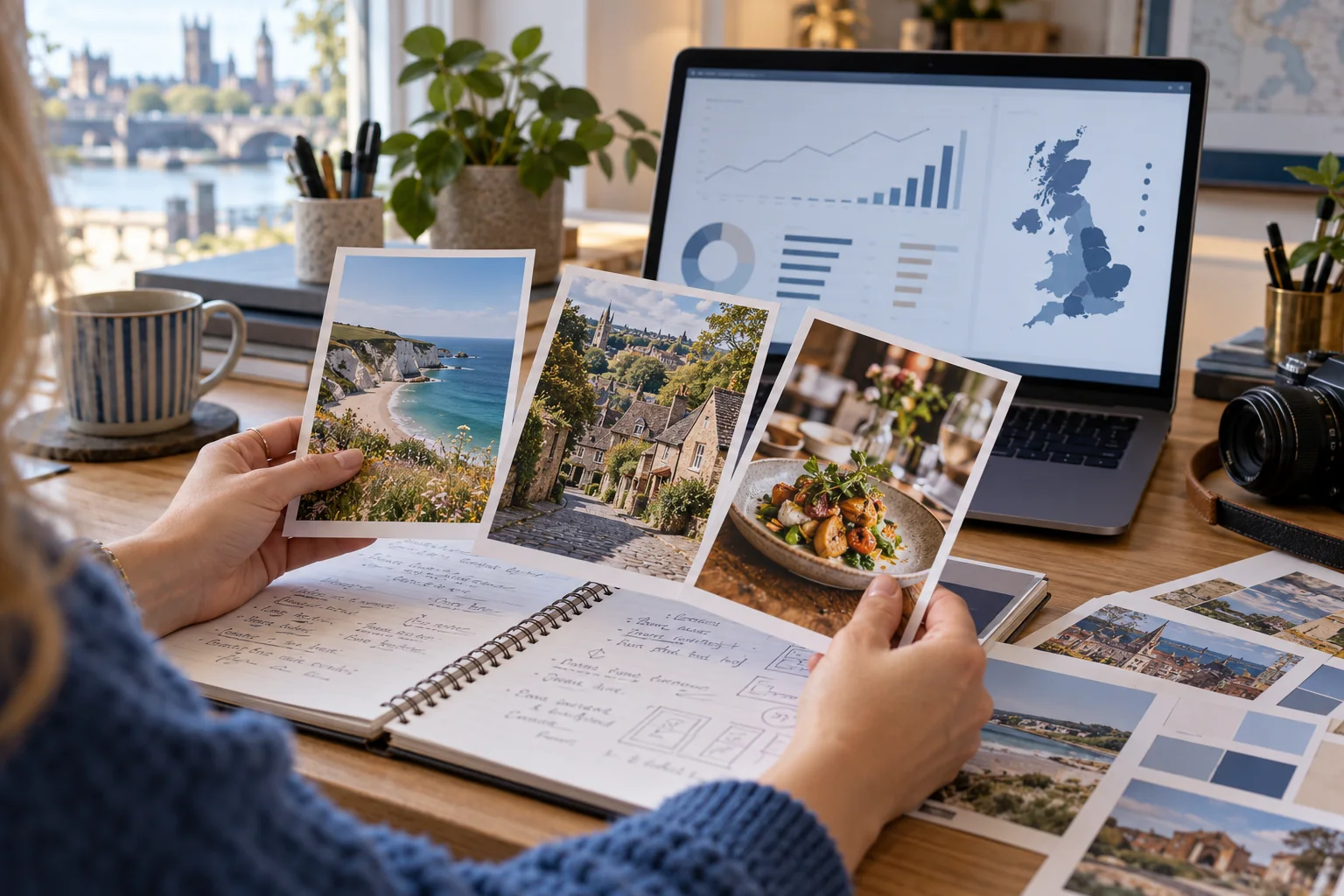
Use each portfolio example to answer a question about craft. What was the brief? Which part did you make? How did you present a product, place or idea accurately? If you have a published piece with a legitimate client, link it and state the role you were allowed to disclose. If you have no paid work yet, use original self-initiated examples instead. A sample can demonstrate framing and editing without pretending it was an endorsed campaign.
Do not use a client's photograph, logo, quotation or result chart just because the collaboration occurred. Check what permission and usage rights you received, and ask before displaying private material in a public kit. You can also make a fresh example with your own objects and locations, clearly labelled as a sample. If the kit includes an identifiable person, check permission before reuse. A source link to the original public post lets a partner judge the work in context rather than from an isolated thumbnail.
An Instagram Collab post is one possible format, not a requirement for a credible kit. Meta describes an invitation that a collaborator accepts before a shared post appears on participating profiles. The separate HitsBoost guide explains those app controls; here the point is what you contributed and what the partner approved. Keep a simple record for each example: public URL, date, your role, partner permission, any relevant disclosure and whether the asset is still available. A kit that can be checked earns more confidence than an image grid with no provenance.
Build a one-page kit, then keep evidence behind it
The table above is a practical outline, not a rule that every creator needs five decorative panels. Put identity and fit first, then a small portfolio, dated audience evidence, the formats you can deliver and a contact route. Include an accessible text version when you can so a recipient does not need to read tiny words inside an image. A short PDF or web page can both work if the links open and the text remains legible on a phone. Store the underlying screenshots and approvals separately so the front page stays easy to scan.
For the fictional photographer, the first draft might say 'Manchester-based photographer; original food-and-place Reels and still images'. Under portfolio she lists two public examples she made herself and one blank space for an approved client sample. Under audience evidence she places the exact date range and metric labels from her own Insights only after checking them. Under partnership options she names a short location Reel and a still-image set as formats she can produce. Every performance cell remains empty until she can supply her own genuine record.
Before sending it, ask a colleague to verify each statement from the public profile or saved evidence. Can the handle be opened? Does each work sample show the role claimed? Are the dates visible and the links current? Does the contact route reach the creator rather than an abandoned inbox? Remove claims that require a guess, such as 'the most trusted local creator', unless you have a precise, current basis to substantiate them. A kit is a working document: update it after a meaningful account or portfolio change, not simply to change the month on the cover.
- Replace every illustrative field with your own checked record.
- Ask permission before naming a client or showing unpublished work.
- Send a short PDF or accessible page and keep the source notes separately.
Turn an enquiry into a specific partnership brief
A brand enquiry is a starting point. Ask what product or place the creator would need to show, who the intended audience is, what questions a customer must be able to answer and where the content will appear. Agree on the deliverables by format and count, draft and final dates, approval owner and the number of revisions included. Decide whether a visit, travel, equipment, editing or accessibility work affects the fee. Do not hide those decisions behind a single 'one post' label.
Usage rights need their own line. A post on the creator's account, an asset reused on a brand website and a paid partnership ad are different uses of work. Agree where the brand may reuse the content, for how long, whether it may edit it, whether music or third-party images have separate restrictions and who preserves the final approved file. A creator should be able to quote for a defined scope without claiming rights that belong to a photographer, venue or platform. Check the current controls before granting access for a partnership ad.
Keep the price discussion factual. A UK creator can quote for the work, time and rights involved, but no universal rate follows from a follower count. An agreement should say what is paid, when it is due and what happens if the brief changes or a scheduled post is cancelled. If the brand supplies a gift or free service instead of money, record that arrangement too, because it matters for disclosure. Neither side should assume that approving the visual means the published caption, link and advertising label have also been approved.
- Define each post or Reel, timing, revision allowance and approval owner.
- Write down whether the brand can reuse the content, where and for how long.
- Agree who checks advertising disclosure on the final published item.
Make paid and gifted relationships clear to viewers
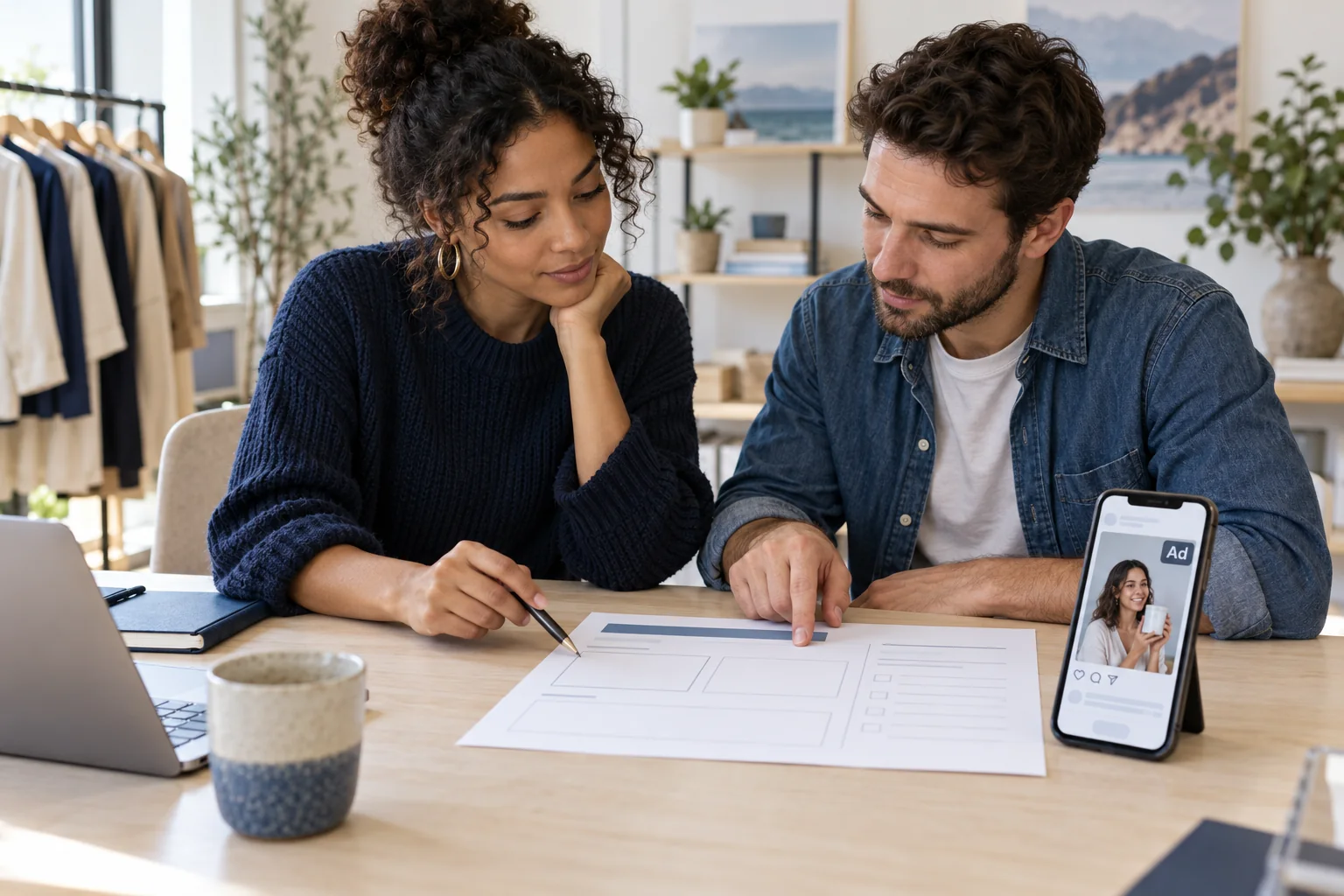
The UK disclosure question is about the relationship behind a particular post. The ASA/CAP influencer guide updated in October 2026 explains payment, gifts, affiliate arrangements and how to make ads recognisable. CMA guidance also addresses social media endorsements and posts about a creator's own connected brand. Review both against the exact brief rather than using an old caption template. A partner's desire for an 'authentic' style does not remove the need to tell viewers about a commercial connection.
Plan disclosure before filming or editing. Decide where a clear label will be visible in the format a viewer first sees, then inspect the published post on a phone. A Collab invitation, brand tag, discount code or private agreement does not automatically communicate the nature of payment or incentive. A platform-provided paid partnership label can help, but current ASA advice says to check whether it is sufficiently clear and prominent in context and add an explicit label where needed. The content should also be accurate about the product or experience shown.
Keep the final brief, approval and disclosure decision with the job record. If the arrangement later changes from a self-funded visit to a gifted service, reassess the published material. The media kit can state that commercial work is disclosed under current UK guidance, but that sentence cannot substitute for disclosure on the actual post. The recipient needs the audience to understand the relationship, not only a compliance promise in a PDF the audience will never see.
Keep follower packages separate from partnership evidence
A follower count can be one field in a kit, but it cannot prove that followers are in the UK, see every post, trust a recommendation or will buy from a partner. If you consider a HitsBoost follower package for the profile, review the current UK service page for the defined quantity, available tier, public destination, checkout total and terms. Keep login credentials private. This is a separate purchase decision, not a method for creating the genuine audience evidence or past client work a brand may request.
Do not insert a purchased count into a media kit as a campaign outcome without explaining what the number represents. Meta has publicly described action against artificial engagement services and platform-rule violations. A provider's password-free ordering flow does not mean Meta has approved it or that retention or distribution is guaranteed. If the partner asks how an account grew, answer truthfully rather than letting an unexplained jump imply organic discovery. A misleading claim can damage the very relationship the kit was meant to begin.
For a creator building long-term opportunities, the defensible work is the public profile, original posts, clear audience evidence, professional communication and honest delivery. If a package is chosen, observe its stated profile-level metric separately. Do not report new follows as attributable enquiries, paid impressions, real customer visits or guaranteed partnership value. An account may have a growing count while an individual post reaches few people, and a smaller account may still make work that fits a particular brand. Let the brief and evidence decide the match.
Explore Instagram FollowersSend the kit, verify the work and update it honestly
Send a short personal note explaining why the creator's work fits that specific UK business or campaign, attach the current kit and link to two relevant examples. Do not send an unsolicited password, raw customer list or private account export. Ask for the brief, intended use and timing before quoting. If there is no fit, a courteous refusal is better than an agreement that requires unsupported audience claims or access you cannot provide safely.
After a collaboration, record what was actually delivered: links to published posts, approval and disclosure checks, any licensed reuse, the invoice status and any agreed reporting period. Keep metrics labelled and dated. Do not convert a change in likes or followers into an unsupported sales claim; the brand may have run advertising, email or other activity at the same time. A useful close-out note identifies what was produced, what was observed and what remains unknown.
Refresh the kit when the profile, location, work samples, availability or evidence has materially changed. Retire an old client example if rights expire and check that a previously public URL still opens. If the account's professional tools or Meta's marketplace change, update only the affected statement rather than reusing an obsolete screenshot. A media kit that stays current and specific gives the next partner a reliable basis for conversation while leaving room for a different brief and outcome.
Frequently asked questions
Do UK creators need a certain follower count to make a media kit?+
No universal follower threshold is required for a truthful media kit. Show the work you make, the audience evidence you can verify and the type of partnership you can deliver. A brand may set its own brief and eligibility criteria.
What if Instagram does not show audience geography for my account?+
Mark geography as unavailable instead of guessing. You can still show your verified working location, public examples and the exact Insights that are available, with date ranges and metric labels.
Should I include my rates on the first page?+
You can give a starting scope or say rates are quoted per brief. A final quote should specify deliverables, work, timing, travel if relevant, revisions and usage rights rather than follow automatically from follower count.
Can I use an unpaid personal project as a portfolio example?+
Yes, if it is your original work and it is clearly identified as a sample rather than a paid client result. Get permission before using another person's image, name, logo or private material.
Does a paid partnership label always meet UK ad disclosure rules?+
Check the particular post against current ASA/CAP and CMA guidance. A platform label may help, but it needs to be clear and prominent when people first encounter the content; add a clear ad label if the context requires it.
Does Instagram Creator Marketplace replace a media kit?+
No. Meta described creator portfolios and UK expansion, but account access and controls vary. An accurate standalone kit remains useful for direct enquiries and for explaining work not visible in a marketplace profile.
Can buying followers guarantee UK brand collaborations?+
No. A follower package concerns a defined profile count. It cannot guarantee UK audience geography, genuine engagement, reach, recommendations, sales or a brand decision. Keep that purchase separate from a kit's evidence.
How often should I refresh an Instagram media kit?+
Update it when the public profile, portfolio, working location or evidence materially changes. Date every metrics snapshot, check links before sending and remove examples when permission or usage rights expire.
Compare Instagram Followers packages.
Prepare the public destination, then review the quantity and terms that fit your goal.
Review UK Instagram follower packages