
This English guide is shared with our global site. Follow related UK service links for current packages. Other service links open the global catalog in its stated currency.

A creator growth plan with distinct jobs
| Layer | Question to answer | Useful evidence |
|---|---|---|
| Identity | What name and destination should people remember? | Public Page or professional profile URL, name, image, introduction |
| Content | What will a follower receive repeatedly? | Original series, format, topic promise, publishing rhythm |
| Audience | Is the connected audience changing? | Followers recorded on the same destination and dates |
| Response | Which posts create useful interest? | Reactions, comments, shares, saves where available, and message themes |
| Viewing | Do videos hold attention? | Views, watch duration, retention indicators, and comparable formats |
| Outcome | What did the work help the creator achieve? | Relevant enquiries, subscriptions, site actions, bookings, or sales |
Choose the identity your audience should remember
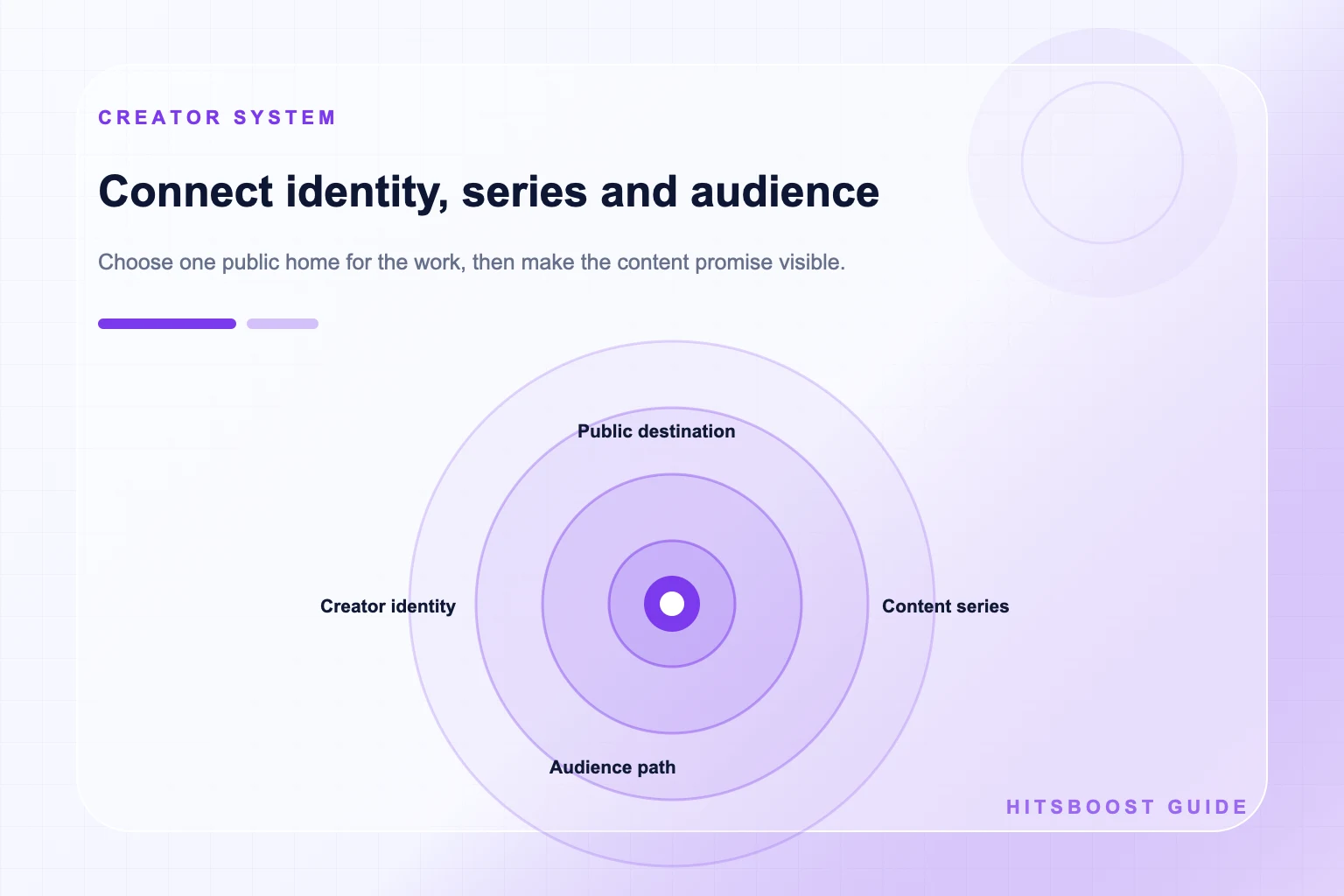
A creator may publish through a Facebook Page, a profile using professional mode where available, or both. The right primary destination is the identity that best matches the name, subject, and relationship promised to viewers. A Page can suit a show, studio, publication, brand, or project with several contributors. A professional profile can suit a creator whose public work and personal name are closely connected. The choice is editorial and operational, not a shortcut to distribution.
Write one sentence that names the destination and its job: ‘This Page is the home of my weekly food experiments,’ or ‘This professional profile is where I publish practical filmmaking lessons.’ Then review the public name, images, introduction, links, and latest posts against that sentence. If visitors could reasonably think they reached a different person or project, fix the identity before asking them to follow.
If both destinations remain active, assign them different roles. For example, the Page may hold a finished video series while the professional profile carries creator commentary and collaboration updates. Avoid automatically posting identical material everywhere. Clear roles reduce audience confusion and give the creator a better basis for deciding which destination a particular campaign should support.
Audit the public destination as a first-time visitor
Copy the Page or eligible profile URL and open it in a private browser session or while signed out where practical. Confirm that the public name, image, introduction, and visible posts match the identity you selected. A creator who manages several Pages can easily copy a similarly named destination, a post permalink, or an administrative view. The public check protects every later step, including website links, partner briefs, analytics notes, and optional package selection.
Read the introduction without relying on insider knowledge. It should tell a new visitor what the creator makes and why the account is worth revisiting. Test the website or newsletter link, contact method, and any action button. Remove expired launch language and replace images that no longer represent the work. These details do not guarantee growth, but they prevent attention from landing on an unclear or abandoned presentation.
Protect account access while making the audit. A public-link campaign does not require giving a provider a Facebook password, authentication code, recovery key, or Page-management access. Meta documents different Page access levels for people who legitimately help manage content, messages, ads, and insights. Give team access only through the platform controls that fit each person's role and periodically review who still needs it.
- The public name, profile image, cover, and introduction describe the same creator or project.
- The Page or eligible profile opens without relying on an administrator view.
- The website, contact route, and featured links are current and relevant.
- Recent public posts demonstrate what a new follower can expect next.
Turn the creator promise into a content architecture
A strong creator profile is easier to follow when several posts feel like parts of the same body of work. Start with three content pillars: the core subject, the process behind it, and the audience problem the creator can help solve or explore. A photographer might use finished shoots, lighting breakdowns, and client preparation. A musician might use performances, production notes, and song interpretation. The pillars should be specific enough to guide choices without restricting every experiment.
Give each pillar one repeatable format. A named weekly series, a short demonstration, a before-and-after explanation, a question answered on video, or a monthly live review can create continuity. Repeat the structure while changing the substance. Viewers then recognize what is returning, while the creator still has room for new examples, guests, formats, and points of view.
Plan the route between posts. A short clip can introduce a longer video; a photo can summarize one lesson; a comment question can become the next explanation. Link to a relevant guide, video, or owned destination when it genuinely helps. This creates depth without filling captions with unrelated links, and it gives a new follower several useful places to continue instead of one isolated update.
Make original work the center of the plan
Meta's March 2026 guidance says Facebook is giving greater reach and monetization opportunity to original creator content while deprioritizing unoriginal material. It describes directly filmed or produced work as original and says a remix can qualify when a creator adds meaningful new information, analysis, or a substantial improvement. Merely stitching clips together, making minor edits, or reacting without adding value may be treated as unoriginal.
For a creator, that means the production question is not simply whether a source clip is popular. Ask what the new post contributes: a demonstration, informed explanation, reported context, creative performance, comparison, experiment, or clearly expressed perspective. Credit and permission still matter where third-party material is used. Added value does not erase copyright, licensing, privacy, or platform-policy responsibilities.
Create a lightweight originality note for recurring formats. Record who made the source material, what the creator added, and where supporting information came from. This is especially helpful for a team that edits clips or manages several contributors. It encourages thoughtful transformation, makes attribution easier, and prevents a fast publishing schedule from becoming a stream of lightly altered material.
Build a rhythm the creator can sustain
Publishing frequency should follow the creator's capacity to make worthwhile material and respond to the audience. Start with a rhythm that can survive a busy week. That may be two substantial posts and one lighter conversation prompt, or one strong video supported by a preview and follow-up. A demanding calendar that produces rushed, repetitive work is less useful than a smaller system with clear editorial standards.
Batch the repeatable parts: collect questions, outline two videos, prepare accessible captions, resize images, and schedule review time. Leave space for timely replies and unscheduled ideas. The plan should reduce production friction, not remove judgment. If a post depends on breaking news or platform changes, verify the source and update the wording before publishing rather than relying on an old batch draft.
Use calls to action selectively. One post may ask people to share an experience, another may point to the next episode, and another may simply deliver the promised value. Repeating ‘follow, like, and share’ under every item can make distinct posts feel interchangeable. Ask for the action that naturally follows from the content, and be prepared to respond when people take it.
- Teach: answer one question or show one useful process.
- Demonstrate: show the work, product, performance, or result in context.
- Connect: invite a specific opinion, example, or question that the creator can answer.
- Return: continue a named series so interested people recognize the next installment.
Separate audience growth from post performance
Followers describe a connection to a Page or eligible public profile. Reactions, comments, and shares describe responses to individual content. Reach describes distribution under the definition shown in the reporting interface. Video views and watch duration describe viewing behavior. These measures can move together, move in different directions, or remain stable for different reasons. None should be renamed as a general ‘engagement’ number without a formula and source.
Suppose a tutorial receives strong watch time but adds few followers. It may have answered a narrow question well without establishing an ongoing series. A behind-the-scenes post may receive modest reach but thoughtful comments from existing supporters. A follower increase may occur during a collaboration while normal post reactions stay flat. Each observation suggests a different editorial question; none proves a platform-wide rule from one result.
Use the metric closest to the decision. Choose follower change when reviewing the public audience connection, comments when assessing conversation, shares when testing whether people passed along an idea, and watch duration when studying whether viewers stayed. For business value, use verified actions such as relevant messages, newsletter sign-ups, bookings, or sales. The creator's dashboard and business systems should retain their separate jobs.
Plan a campaign around one honest objective
Before a launch, write one primary objective and one supporting objective. A primary objective might be introducing a new series to the existing audience, building recognition for a Page, or attracting qualified visits to a portfolio. The supporting objective might be collecting questions for the next episode. Avoid a plan in which every metric must rise at once; that makes it impossible to know which creative or distribution decision deserves attention.
Record the destination, campaign dates, content sequence, promotion sources, and baseline. If collaborators, advertising, email, press, or an optional follower package are involved, place them on the same timeline as separate activities. Later movement may coincide with several of them. A timeline supplies context, but it does not prove that one item caused all changes.
Define what the campaign cannot promise. A follower package concerns the quantity and destination stated in its offer; it cannot guarantee organic reach, comments, watch time, enquiries, or revenue. Likewise, a strong organic post cannot guarantee that everyone who views it will follow. Clear scope protects the creator from turning an audience plan into claims the evidence cannot support.
Explore Facebook FollowersUse a practical 30-day creator cycle
In week one, complete the identity audit, record a baseline, and publish an introduction to the creator promise. Release the first entry in one repeatable series. Ask a focused question that can inform a later post. In week two, publish a second installment and one process-focused item. Respond to relevant comments and collect recurring audience language without treating every comment as a representative survey.
In week three, adapt the strongest idea into a different format. Turn a written explanation into a short demonstration, or summarize a video with a visual checklist. Add meaningful new value rather than uploading a duplicate. If another creator or organization is relevant, use a collaboration that makes sense to both audiences and document any permission or commercial relationship.
In week four, complete the series entry, review the month, and decide what to continue. Compare like periods and similar formats. Keep the format that produced useful viewing, conversation, return visits, or business actions; revise the weak opening or unclear promise; retire work that has no clear audience purpose. The next month should be an informed revision of the system, not a completely new strategy built from one high number.
Run a weekly review that leads to one decision
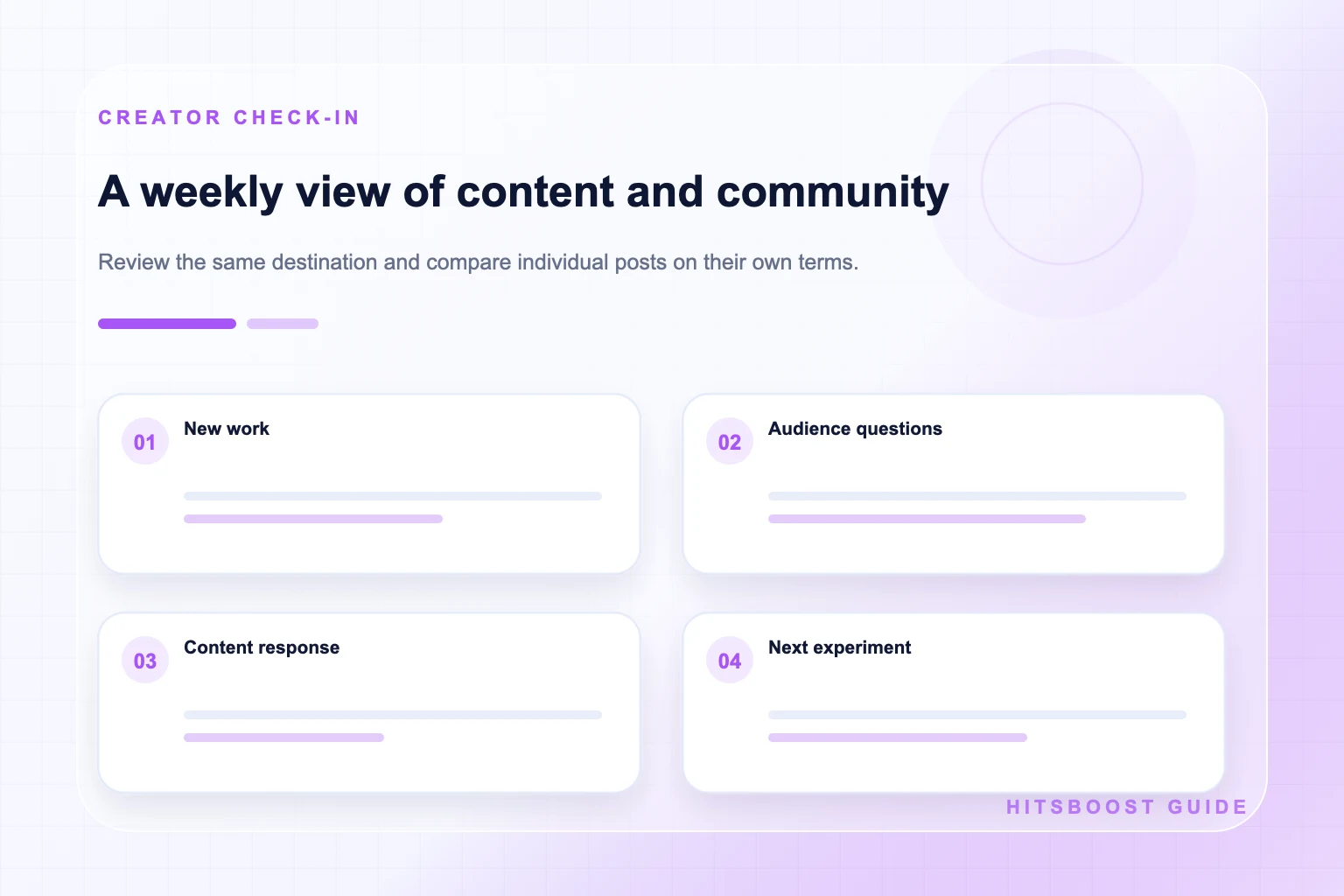
Choose a consistent weekly review point and use the same destination and date range. Record followers and Page likes separately where both are available. List the posts published, then capture the response measures that matter for each format. For videos, include views and viewing-duration measures that the current interface provides. Note relevant messages, link actions, and business outcomes in their own columns.
Next, add context: topic, format, length, opening, publication time, collaboration, paid distribution, and any technical issue. Compare several similar items before inferring a pattern. A single post can be affected by subject matter, timing, external events, or an unusually active conversation. The review should produce a hypothesis that can be tested, not a permanent rule about what the platform rewards.
Finish with one editorial action. Examples include making the value clearer in the first seconds, continuing a question-led series, explaining a repeated audience concern, improving the public introduction, or removing a weak link. Assign an owner and a review date. A short report that changes the next piece of content is more useful than a large dashboard nobody uses.
- Record the same destination, date range, and metric definition each week.
- Compare several posts rather than declaring a winner from one unusually high or low result.
- Write one observation, one plausible explanation, and one next test as separate statements.
- Keep follower movement separate from content response and verified business actions.
Evaluate optional follower support without overstating it
If a creator considers a Facebook follower package, begin with the public Page or eligible profile chosen in the identity plan. Confirm the visible name and follower label, copy the audience-level URL, and record the starting count. Do not submit a link to one post or video for a follower service. Compare the tier, quantity, current price, delivery wording, and written support or refill conditions before checkout.
Never share a Facebook password or authentication code for a public-destination order. Keep the receipt, order reference, selected package, and support route. Check the same public destination at sensible intervals and describe the displayed movement as an observation. Independent follows and unfollows, rounding, reporting updates, and other campaigns can affect the visible net total.
Keep the package in its proper role. It may change the count described in the offer, but it does not create the creator's voice, original work, community relationship, or business value. Continue the publishing and review system whether or not a package is used. The useful question after any campaign is what was ordered, what was observed, what content people responded to, and what the creator will improve next.
Explore Facebook FollowersFrequently asked questions
Should a creator use a Facebook Page or professional profile?+
Use the destination that clearly represents the public work and the relationship viewers should follow. A Page can suit a project, show, or brand; a professional profile can suit a creator-led identity where professional mode is available. Review Meta's current controls and give the two destinations distinct roles if you maintain both.
How often should a Facebook creator publish?+
Choose a rhythm that preserves usefulness and can continue through a normal busy week. Two strong posts can be better than a daily schedule filled with repetitive material. Review several weeks of comparable work, audience response, and production capacity before changing the cadence.
Do more followers automatically increase Facebook reach?+
No. Followers and reach describe different things, and distribution involves many signals and user choices. Record both separately. A follower package should not be presented as a guarantee of reach, reactions, watch time, enquiries, or sales.
What counts as original Facebook creator content?+
Meta's current guidance describes directly filmed or produced content as original and recognizes transformed work when the creator adds meaningful new information, analysis, or substantial creative value. Minor edits or duplicative uploads may be deprioritized. Rights, permission, and attribution still need separate attention.
Which Facebook metrics should a creator review weekly?+
Start with the metric tied to the current decision: followers for audience connection, post interactions for response, views and watch duration for video behavior, and verified enquiries or conversions for business value. Keep the destination, date range, source, and formula beside every figure.
Can creators buy Facebook followers without sharing a password?+
A public Page or eligible profile URL identifies the destination for a public-link follower package. Do not share passwords, authentication codes, recovery keys, or unnecessary Page access. Verify the public link and read the current package and support terms before deciding.
How long should a creator test a content series?+
A four-week cycle is a practical starting structure, not a universal platform rule. It gives enough room to publish several installments, review comparable evidence, and revise one element. A time-sensitive launch may use a shorter window, while an educational series may need longer.
Compare Facebook Followers packages.
Prepare the public destination, then review the quantity and terms that fit your goal.
Compare follower packages for creators