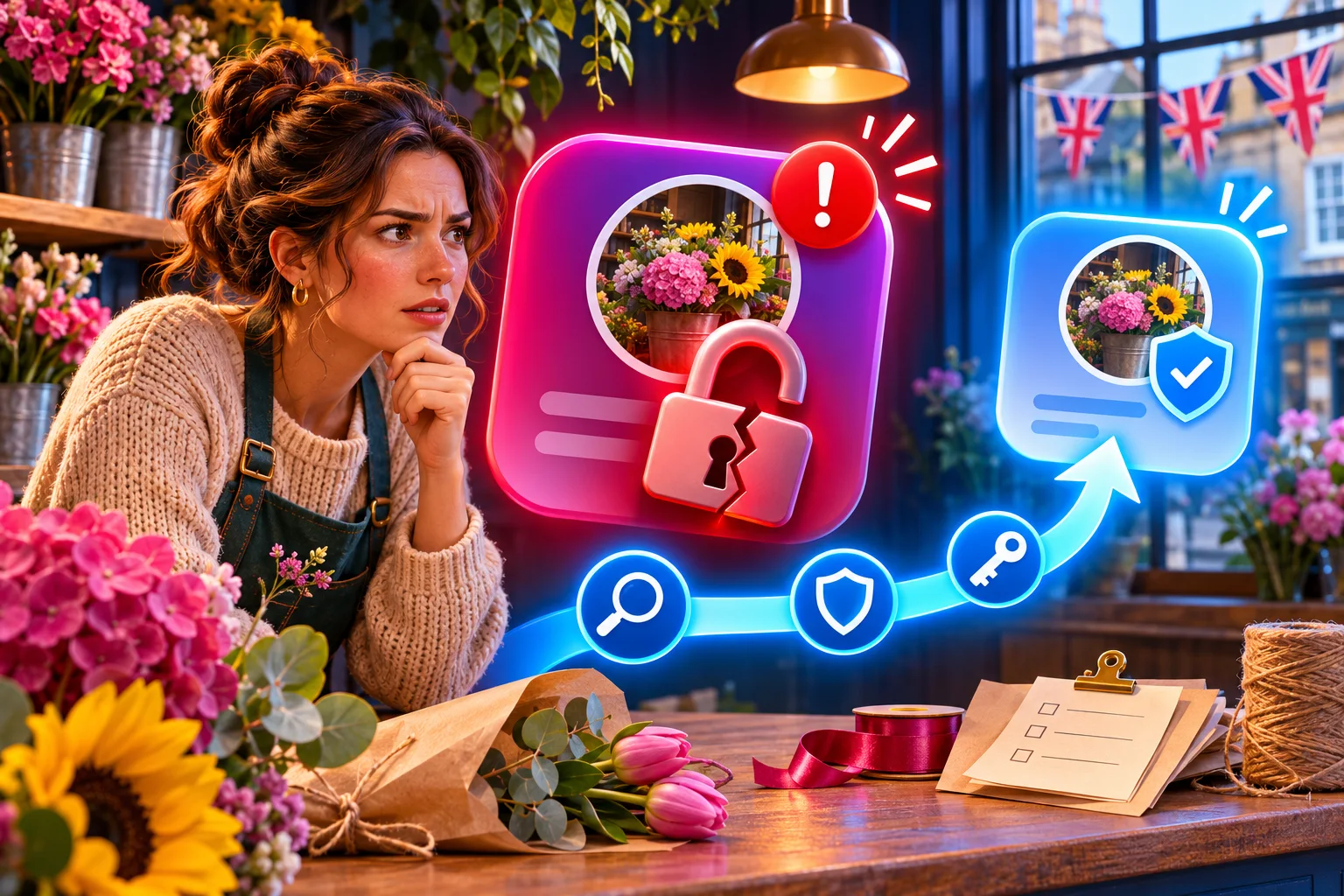
An incident worksheet for a fictional Leeds florist; times are priorities, not platform response guarantees
| Stage | Owner's question | Do now | Keep as evidence |
|---|---|---|---|
| First check | Is the real account controlled by someone else? | Test a known device and independent public view; appoint one incident lead | First alert, exact time, observed change |
| Containment | What else can the intruder reach? | Secure linked email; review sessions, other logins and connected assets | Actions taken and account-change alerts |
| Recovery | Which official route applies? | Use instagram.com/hacked and follow the options actually offered | Submission time and reference if supplied |
| Customer protection | Could someone be misled or pay a fraudster? | Warn via a channel still under business control; route payment victims to their bank | Copy of accurate notice and affected enquiries |
| Return and review | Is the account truly under business control? | Check profile, messages, connections, ads and recovery settings | Changes found, corrections and assigned follow-up |
Confirm a takeover before choosing a recovery path
A real takeover means an unauthorised person has gained access to the business's actual Instagram account. It is different from a second profile copying the shop's name and pictures. The florist first opens the known profile from a device already used by the owner, then checks its public URL independently from a browser. An altered bio, unexplained messages, removed staff access or changed contact details can support a compromise assessment. One failed login, however, might be a forgotten password, an app fault or a restriction. Do not announce a hack as fact solely because a single screen will not load.
Ask which of three situations applies: an authorised owner can still sign in; no authorised owner can sign in; or the real account is intact while another profile imitates it. The first calls for immediate access and session checks. The second needs the official recovery route alongside protection of related accounts. The third belongs to the separate impersonation guide, although both can happen at once. If the platform displays a policy or suspension notice, read the notice and use its indicated review path rather than describing it as a hacked-account recovery case.
Write down the account's exact username, the time of the last normal use, what the team observed and which device was used. Avoid posting a public theory about who did it. A small business can take protective action while facts remain uncertain; it should describe the customer risk accurately rather than making an accusation it cannot verify.
Give one person the incident log and an immediate decision tree
The first minutes feel chaotic when the social inbox also carries booking questions. Put one owner in charge of decisions and a second person in charge of recording evidence. The decision owner chooses which controlled channel will carry a warning, while the recorder captures alerts, public changes and actions in order. Neither needs to take a customer password or a screenshot of a private payment card. A dated note with the exact observable fact is more useful than a long thread of guesses.
The example florist notes that the usual owner was signed out at 09:12, a colleague saw a changed bio at 09:17 and a customer reported a payment request at 09:24. These times are fictional and illustrate a record, not a claim about platform recovery speed. For each item, include the observer, source, screenshot location if one is safely retained, and any action already taken. Keep copies of security notices in the mailbox where permitted, but check for malicious links before interacting with them.
Use the table above as a sequence, not a promise that every stage will be completed in an hour. If the shop is short staffed, protecting the linked email and warning customers about a false payment instruction may be more urgent than drafting a polished explanation. Assign a review time for each open item. This prevents a submitted recovery request from becoming the entire response while a fraudulent bio link remains visible.
- Record the first known alert and the last time an authorised person used the account normally.
- Save relevant public changes and security notices without copying passwords or codes into the log.
- Choose one response lead and one backup so the team does not send conflicting support requests.
If an owner is still signed in, secure access without trusting it blindly
A remaining signed-in device is valuable, but it does not prove that the intruder is gone. From a known device, inspect the account's current security and login controls. Where available, change the Instagram password to a unique one, enable or review two-factor authentication, check login activity or active sessions, and remove sessions or connected tools that the owner does not recognise. Menu wording and available controls can change. Follow the controls shown in the official app and its Help Centre, and note exactly what was possible.
Protect the linked email before assuming the Instagram password change will hold. The NCSC advises checking email forwarding rules as part of a hacked-account response: an intruder with mailbox access could receive reset messages after the social password changes. Use the email provider's own security settings to change an exposed password, inspect recovery information and sign out unfamiliar sessions where offered. If the same password was reused elsewhere, change it there too through that provider's official site. Keep new credentials out of the team's incident log.
Do not remove a colleague's legitimate business access in a rush without understanding who owns the Page, ads and customer queue. A named access review is distinct from handing the account to a third-party recovery service. If a particular session or tool appears suspicious, record it and remove access through the official control when safe. If control disappears during this work, stop relying on the open session and switch to Instagram's hacked-account recovery path.
- Start from a trusted device and a bookmark or address you type, not a link in a suspicious message.
- Secure the linked mailbox and any reused passwords; review forwarding rules and recovery methods.
- If you still control Instagram, check its current security controls and unfamiliar sessions or linked tools.
If locked out, start at Instagram's official hacked-account route
Type instagram.com/hacked directly or reach recovery from Instagram's app or Help Centre. Meta launched that dedicated route for access issues and says its newer recovery experience adapts to the situation presented. Choose the option that matches the actual problem, provide the requested details only within an official flow and keep any confirmation or reference the platform supplies. Use a familiar device and location if possible, because Meta says its systems recognise familiar sign-in context; this is a helpful condition, not a guarantee of approval.
An attacker may have changed the email address, phone number or password. Check the original mailbox for genuine security notices while protecting that mailbox, but do not follow an unexpected link just because its display name says Instagram. Navigate independently to the app or known address and compare the incident with the recovery options currently offered. A selfie video or another identity step may be offered for an eligible case; Meta describes these as adaptive options, not a universal UK entitlement. Follow the prompt you actually receive rather than buying a service that claims it can skip verification.
Keep one record of what was submitted and when. Repeating the same form from multiple staff accounts can make the internal timeline hard to reconcile. If the route asks for information the owner cannot safely provide, use its official help path and document the obstacle. Never send a one-time code, backup code, password, session cookie or identity document to someone who approaches by DM offering to recover the account. HitsBoost, a social-media agency or a friend cannot override Meta's account-ownership decision.
Secure the email and other access routes around Instagram
The account's recovery mailbox may be the attacker's second route back in. The NCSC specifically recommends checking email filters and forwarding rules, because an attacker can silently receive copies of future messages. Also review the email account's recovery address, trusted devices and two-step verification using its provider's current settings. A shop may have more than one authorised mailbox for social accounts; identify which one the platform actually uses before changing details. Ask the person who manages it to act from a trusted device, not from a forwarded alert.
Next map the connected business environment. Instagram may be linked with a Facebook Page, a Meta business portfolio, advertising assets and approved third-party scheduling tools. Check who has access to each and whether any unfamiliar person or app was added. A changed password on one account does not prove that a connected Page or scheduler is clean. Conversely, do not delete an essential Page or revoke every legitimate employee just because an unfamiliar notification appears; verify the object and its owner first.
If a staff member's own account or device was used to enter a code on a phishing page, that separate account needs attention too. Keep the investigation proportional: list known accounts and access paths, mark what is controlled, what is uncertain and who can examine it. The UK staff-access guide covers planned permissions. This article focuses on responding to an active compromise, where access and customer safety take priority over redesigning the whole team structure on day one.
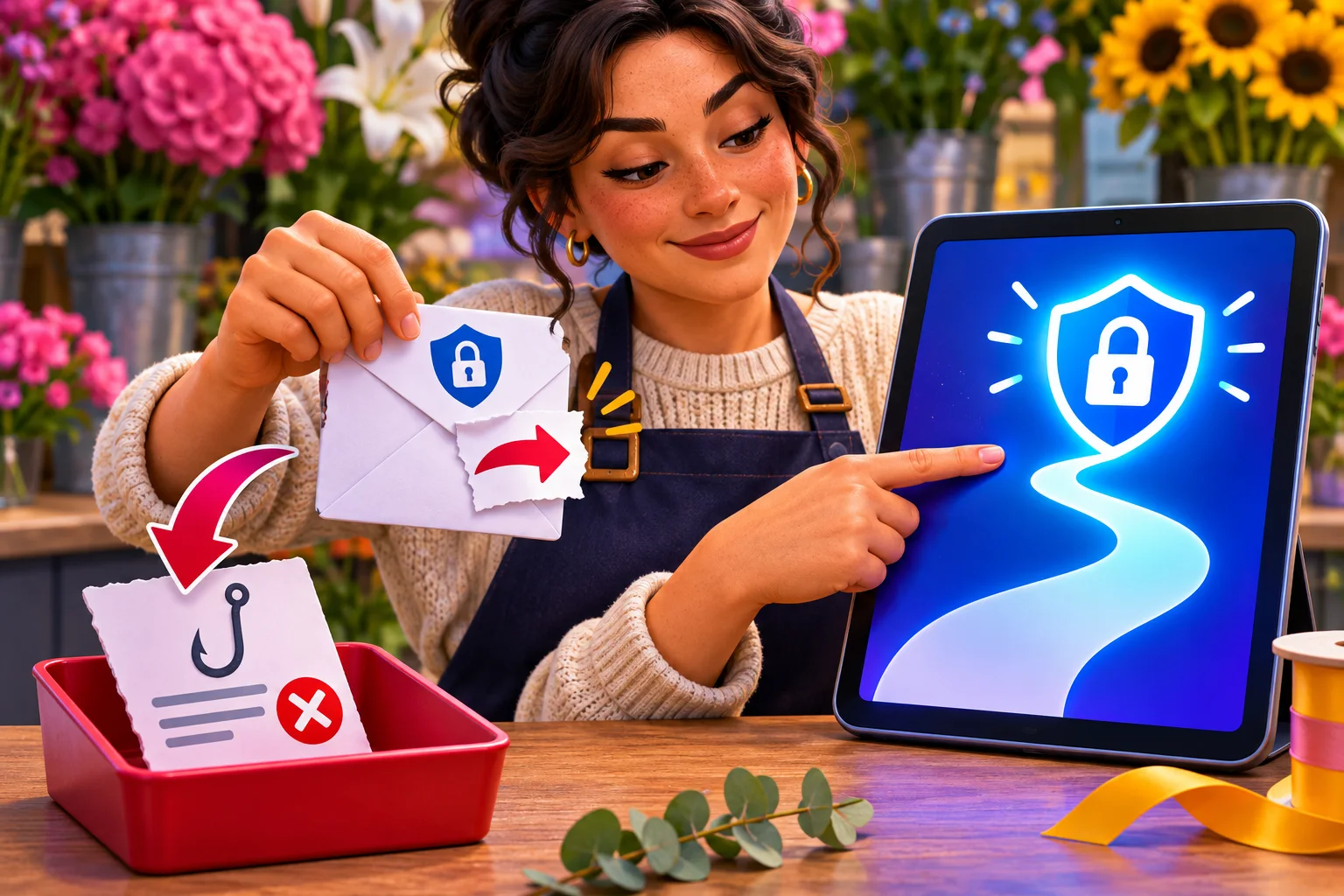
Check connected Page, ads and tools for unauthorised changes
A business Instagram account is often only one part of the public route. The florist's Facebook Page may link to it, a booking page may use its bio URL, and an approved scheduler may publish through a connection. From the accounts still under owner control, review Page roles or named access, pending posts, recent ads, spending settings and connected applications. Treat the current product interface as the authority for available controls. The aim is to find and stop changes the business did not approve, not to assume every tool uses the same permissions.
Pay particular attention to destination changes. A compromised profile might direct people to a false order form, while an ad could send them elsewhere even after the bio is corrected. Preserve evidence of the old destination before removing it when safe, then test the live public route on a separate device. If an unauthorised charge appears, contact the payment or ad provider through a known account route and follow its dispute procedure; do not assume Instagram recovery will reverse a card charge.
If an agency or colleague manages assets, give them a precise task: check named access and activity for a defined account, and report only facts. Do not send them a shared login for convenience. Meta's Business Suite describes linked management of Facebook and Instagram, but ownership, role and audit controls differ by asset. Note the result for each asset so a returned Instagram account does not hide a still-open access path.
Assess customer data and UK reporting duties separately
A takeover can expose more than a public profile. The business may have customer names, addresses, booking details or private messages in the inbox. It should assess whether personal data was accessed, disclosed, altered or made unavailable, what kinds of people and information are involved, and how likely harm is. A strange outgoing DM is evidence of unauthorised use, but it does not by itself reveal every message the intruder read. Preserve what the platform shows and avoid claiming certainty that the interface cannot provide.
The ICO says organisations must report a notifiable personal-data breach without undue delay and no later than 72 hours after becoming aware; if reporting is later, they must give reasons for the delay. Not every breach meets the reporting threshold. The ICO also says to record breaches whether or not they are reported, and inform affected people without undue delay when the risk to them is high. The business's privacy lead or qualified adviser should assess the actual facts and current ICO guidance. Do not wait for account restoration before starting that assessment if customer information may be at risk.
Fraud reporting is another decision. A customer who paid a false link should contact their bank or card provider promptly through a trusted channel. In England, Wales and Northern Ireland, Report Fraud accepts cyber-crime and fraud reports; Scotland uses Police Scotland. These routes do not replace Instagram's recovery form or the ICO assessment. Record which reports were made, by whom and under what reference, without publishing a customer's sensitive details in a social warning.
Warn customers through a channel the business still controls
If the account sent suspicious DMs or changed its payment destination, a quiet recovery request leaves customers exposed. Use the business website, physical shop, verified mailing list or another channel the owner still controls to say what is known: the Instagram account is under investigation, which payment or contact route should be ignored, and how to verify the genuine business. Make the notice dated and concise. Do not name a suspected employee or describe a fraud loss that the team has not confirmed.
For the florist, a website notice might say that the shop is investigating unexpected Instagram messages and that orders should be confirmed through the website's established contact route while the account is checked. A colleague at the counter can repeat the same instruction. Do not ask customers to send card numbers, passwords, recovery codes or full identity documents to prove that they received a message. Give a person who paid a false request a clear bank-first action, then direct them to the applicable fraud-reporting route.
Keep a copy of the notice and its publication time in the incident log. Once the account returns, update or remove the warning only after checking that the public profile, inbox and linked payment paths are again controlled. If the business also discovers a separate lookalike profile, report it through Meta's relevant impersonation controls and follow the UK impersonation guide. A takeover and an imitation account can overlap, but recovering one does not automatically remove the other.
- Use a website, storefront or other already controlled channel to state exactly which account or payment route is genuine.
- Ask anyone who paid a fraudster to contact their bank or card provider directly and promptly.
- Preserve the wording, date and location of the warning, then correct it as facts change.
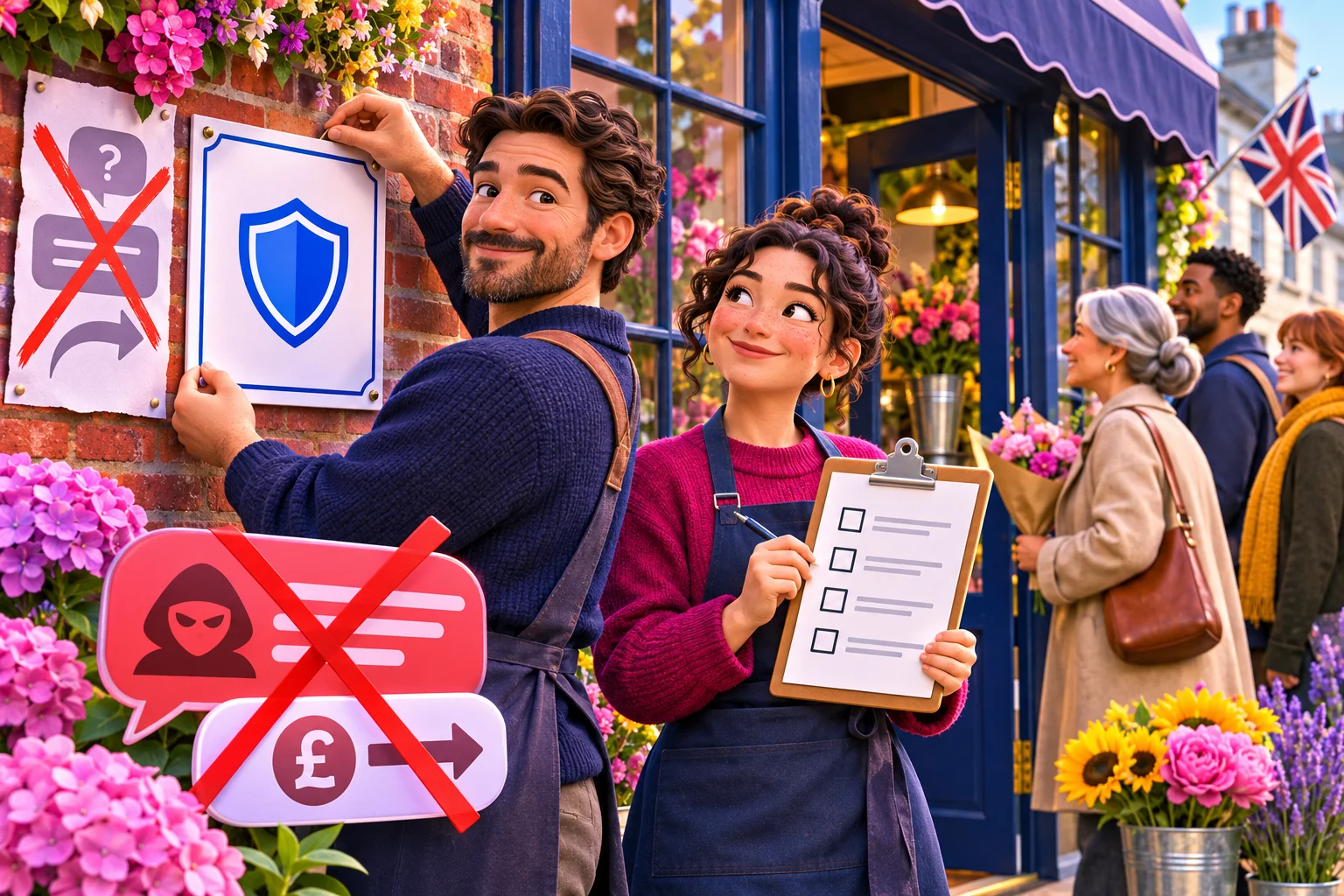
After access returns, audit before announcing normal service
An account that opens again is not yet a clean business channel. Verify recovery email and phone, password and two-factor settings, familiar sessions, named staff access, connected apps and any linked Facebook or ad assets. Check the bio, profile image, public links, Highlights, recent posts, Stories, scheduled content and messages for unauthorised changes. Record what was found, what was corrected and what remains uncertain. Ask a second authorised person to review the public profile from outside the owner's logged-in view.
Review customer conversations carefully. If a false booking confirmation or payment request was sent, contact affected people through a known route with accurate facts and an appropriate private support path. Do not delete useful evidence before it is recorded. If the account's inbox may contain exposed personal data, continue the UK data-breach assessment even if the visible posts look normal. Close a suspicious third-party connection only after identifying its function and replacement so normal customer replies do not silently stop.
Meta's support update describes newer adaptive recovery and support tools, but it does not guarantee immediate restoration or an identical journey for every UK business. A successful login, a platform confirmation and a completed business audit are separate checkpoints. Only when the team can verify its current public destinations and answer customers accurately should it resume scheduled promotions. This deliberate pause is cheaper than reusing a compromised link in a fresh campaign.
Work a realistic first-day timeline when recovery stalls
Imagine the florist cannot sign in by mid-morning. At the first check, its owner verifies the exact public profile and records the changed bio, while a colleague secures the linked email and checks forwarding. The owner begins instagram.com/hacked from a familiar device and keeps the reference if one appears. At the same time, the shop puts a short warning on its own website and briefs counter staff. This is an example of parallel tasks, not a timetable for Meta to respond or a claim that a particular recovery option will appear.
Later that day, the team reviews the connected Facebook Page and approved scheduler, speaks privately with customers who reported suspicious payment requests, and asks its privacy lead whether the inbox may contain personal data that needs assessment. It checks the warning and account state at planned intervals rather than refreshing support screens constantly. If the recovery route requests an eligible identity step, the owner follows that official prompt. If no step appears, the team records the problem and uses the support path available in the current app or Help Centre.
The business continues to serve existing customers through a reliable channel it controls. It should not create a new account and tell everyone that the old one is permanently lost after a single failed attempt; the NCSC notes that recovery processes differ and may not always succeed. Equally, it should not promise that access will return by tomorrow. The log separates confirmed facts, open questions and next owners so an overnight handoff does not restart the investigation or allow a false payment link to be overlooked.
Close the incident and rebuild a safer routine
When the team has verified control, write a closure note: the first sign, recovery route, accounts checked, customer warnings, data-risk decision, corrections made and any unresolved issue. Review why the incident was possible only to the extent evidence supports it. An exposed reused password, a compromised mailbox, a lost device and an over-broad staff permission call for different prevention steps. Do not label an employee the cause because their name appears in a notification without corroboration.
Build a short recurring check rather than a thick manual nobody opens. Use unique credentials, the strongest suitable sign-in check available, secured recovery email, named staff access, a known backup controller and a current list of approved connected tools. Run the ordinary account-security checkup separately from this incident plan. Check that customer-support staff know the fallback contact route, and practise a one-page scenario before the next busy season. A real incident is the wrong moment to discover that only one person knows which mailbox owns the profile.
HitsBoost's UK Instagram follower packages are a separate public-profile count service. They cannot recover a hacked account, secure a login, verify a business, replace customer warnings or guarantee reach and sales. Consider any such purchase only after the account and public destination are under the owner's control, and assess its current terms for that independent purpose. The lasting result of this guide is a business that can recognise a takeover, act through official routes, protect people while it waits and explain what was checked without claiming certainty it does not have.
Frequently asked questions
My shop's Instagram login stopped working. Was it definitely hacked?+
No. Check a known device, the public profile and any official account notice. A forgotten password, temporary fault or restriction can resemble a takeover. If unauthorised changes appear, preserve them and use Instagram's official hacked-account route.
Where should a UK business start if it cannot access its real Instagram account?+
Type instagram.com/hacked or start from Instagram's own app or Help Centre. Choose the option matching the actual access problem. Protect the linked email and any connected assets while waiting; do not use a recovery agent found in a DM.
Can a recovery service guarantee that Instagram will return the account?+
No outside service can guarantee Meta's identity or account-ownership decision. Meta's recovery options depend on the case. Keep passwords, one-time codes, backup codes and identity documents inside the official process only.
What if the attacker changed the email address?+
Secure the original mailbox and inspect genuine security notices, forwarding rules and recovery settings. Use the official hacked-account route to report the access problem. Do not rely on a link in an unexpected message solely because it displays Instagram's name.
Should we tell customers while the recovery request is open?+
If the account could send false messages or direct people to a false payment route, use a website or another channel you still control to give a dated, factual warning and a trusted verification route. Correct it as the facts change.
Does a hacked Instagram inbox always require an ICO report?+
No. The business must assess whether a personal-data breach occurred and meets the ICO reporting threshold. Notify without undue delay and no later than 72 hours after awareness when required; give reasons if later. Record the assessment even if no report is required.
What should a customer do if they paid a link sent from the compromised profile?+
They should contact their bank or card provider immediately through its usual app or published number. In England, Wales or Northern Ireland, Report Fraud takes cyber-crime and fraud reports; in Scotland contact Police Scotland. A platform report does not replace those steps.
Is the account safe as soon as an owner can log in again?+
Treat login as one checkpoint. Review recovery settings, sessions, connected tools, Page and ad access, public links, scheduled posts and relevant messages before declaring normal service. Continue any customer-data assessment independently.
Will buying followers help us recover the account or prove it is ours?+
No. A follower package is a separate count service for a controlled public profile. It does not affect Meta's recovery decision, verify identity, secure credentials or undo fraudulent messages.
Secure the account before considering a package.
A follower package cannot restore access or verify ownership. Once the business controls its public profile again, review any optional service, quantity and terms separately from the recovery work.
Review UK Instagram follower options after securing access